A School Refusing to Disappear
Once known for its trophies and academic achievements, Merefa Medical Lyceum in Ukraine is now measuring success in a very different way: by keeping its community together.
By Veslemøy Maria Svartdal
In 2018, Merefa Medical Lyceum in the Kharkiv region in eastern Ukraine was already very successful.
Harvesting multiple trophies in the Ukrainian School Olympiads and first prizes in national pedagogical exhibitions, it seemed like the school could do no better.
However, underneath the success, problems were simmering.
The constant pressure to compete was affecting the learning environment. Teachers, students and administrators struggled to listen to one another and find common ground. The school also found it difficult to build trusting relationships with parents.
“Since we were perceived as such a successful school, it was a bit embarrassing to admit that we had problems,” recalls Ukrainian language teacher and former Deputy School Head, Olena Kolodyazhna.
Then, almost by chance, she came across an announcement from the European Wergeland Centre’s Schools for Democracy programme, looking for schools to take part in a new project.
“It really caught my eye. It had it all,” she smiles.
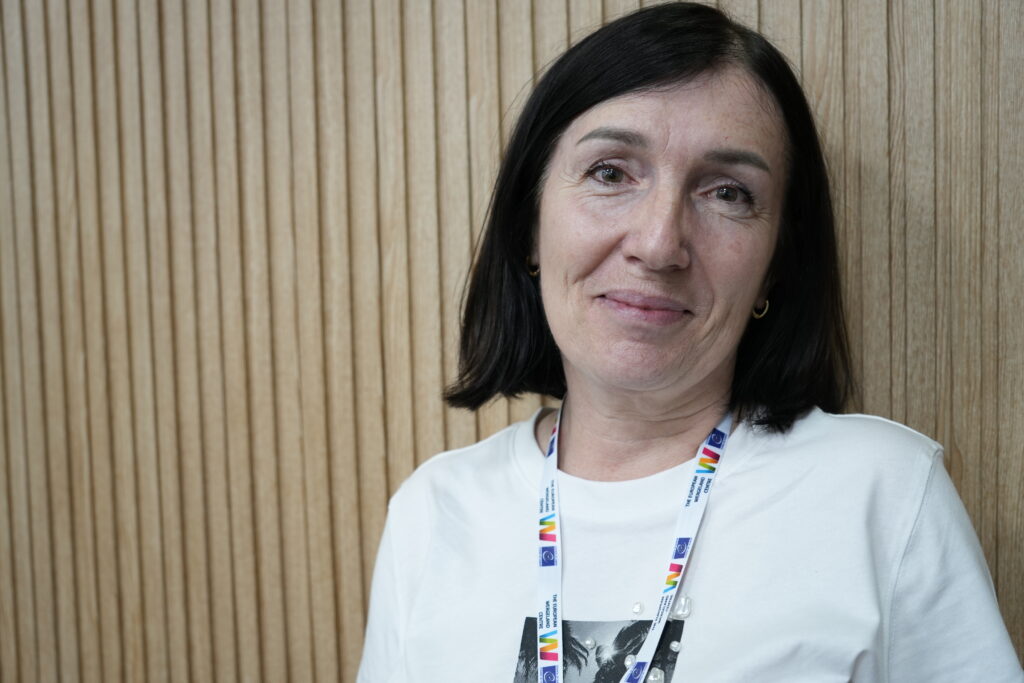
A LASTING IMPACT: “No course or project we have participated in since “Schools for Democracy” have had such a high level of influence on people’s minds,” says Olena Kolodyazhna.
Starting from a Blank Page
“Schools for Democracy” is the Wergeland Centre’s largest and longest-running project. So far, 400 schools and kindergartens have taken part in the project and over 170 000 teachers have received training through the programme.
In 2018, Olena became one of them.
“Honestly, we didn’t know what to expect from the programme,” she says. “We were just looking for a way out.”
The training seminar in Kharkiv was led by members of the Wergeland Centre’s extensive pool of Ukrainian trainers, experts in Education for Democratic Citizenship and Human Rights Education (EDC/HRE) and the Whole School Approach.
Even before the training began, the participants were confronted with an uncomfortable question: what did they actually want to change?
Olena remembers her colleagues arguing about how to present the school.
“Everyone was shouting, ‘Oh, my God, we have so many achievements to present!’ I tried to explain that it is these very achievements that go against our understanding of the humanity in our students.”
When they ran out of time, Olena suggested they leave the page blank.
“And that is how we came to training.”
The Transformation of the Merefa Medical Lyceum
The seminar challenged the participants to examine their attitudes towards themselves and others. There were disagreements and heated discussions.
But for Olena, something fundamental began to shift. The programme showcased how democracy is not only a set of values or something to teach in a classroom, but a way to live and cooperate.
When she and her colleagues returned to Merefa, Olena could feel the excitement and curiosity fill the halls.
“The entire community had not been this united in its hopes for a long time.”
The school began using the Democratic Development Tool – a self-reflection tool specifically designed for the programme – to examine how democratic principles could become part of everyday school life.
What they discovered was not always comfortable.
The school’s focus on achievements had sometimes come at the expense of its students. Opportunities for student self-government were missed, children’s ideas went unheard, and trust between students and teachers suffered.
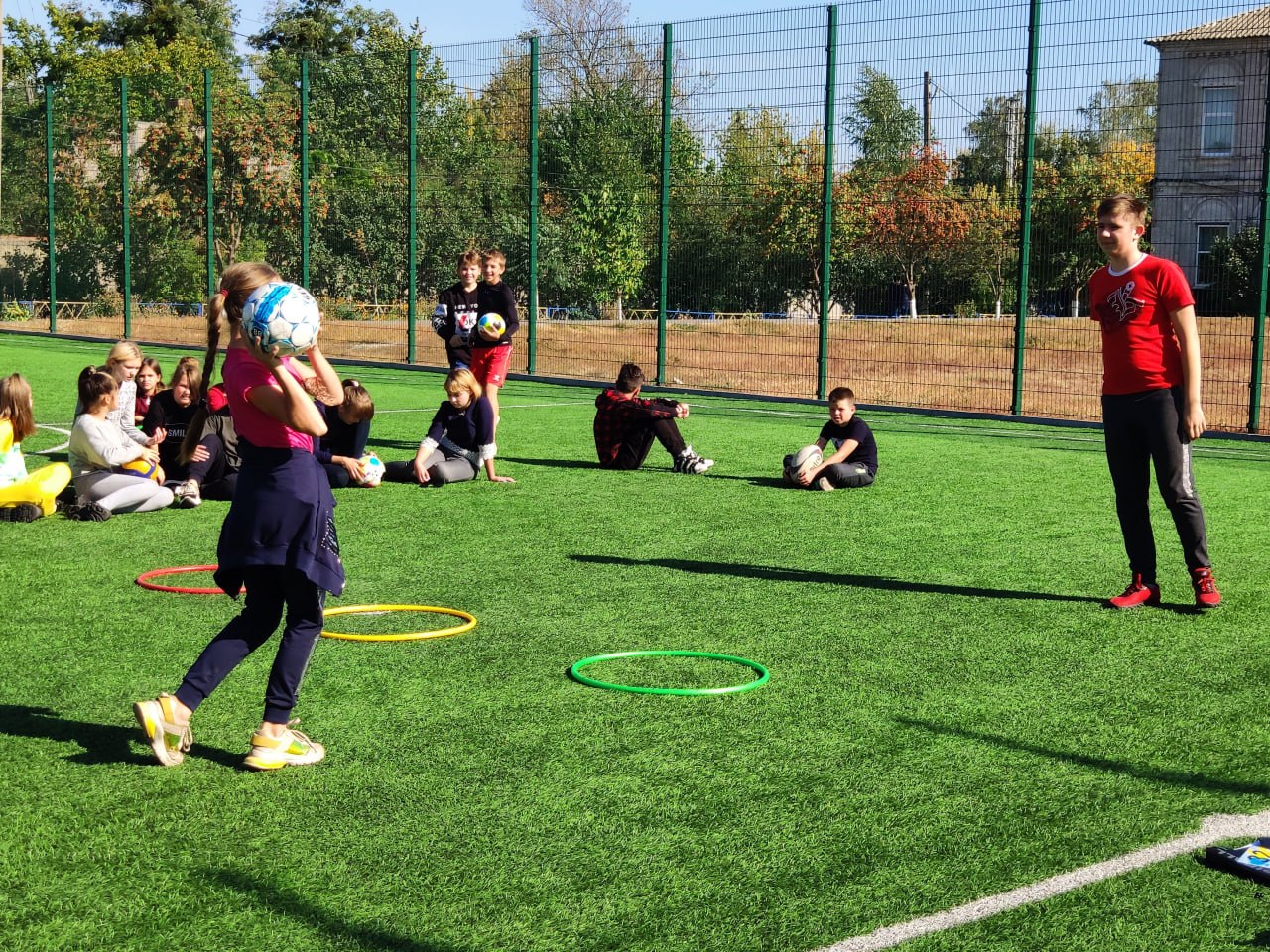
Olena explains that when students finally were given the freedom to voice their opinions, they revealed that they wanted more sporting activities and ways to socialise in informal settings.
New student leaders emerged, organising football games, friendly tournaments and other activities. Gradually, students became less afraid to approach teachers and administrators with their ideas.
Some were even invited to participate in the Lyceum Council and staff meetings.
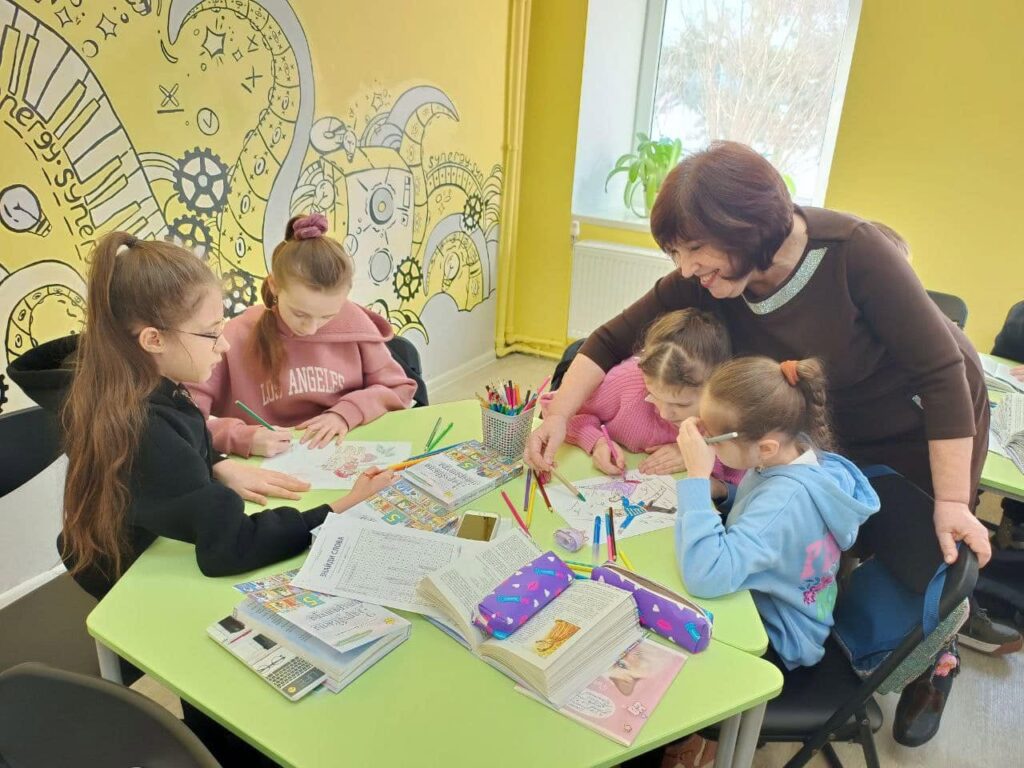
PROFOUND CHANGE: When the school started taking the young students’ voices into account, the learning environment at Merefa changed for the better. (Photo: Merefa Medical Lyceum)
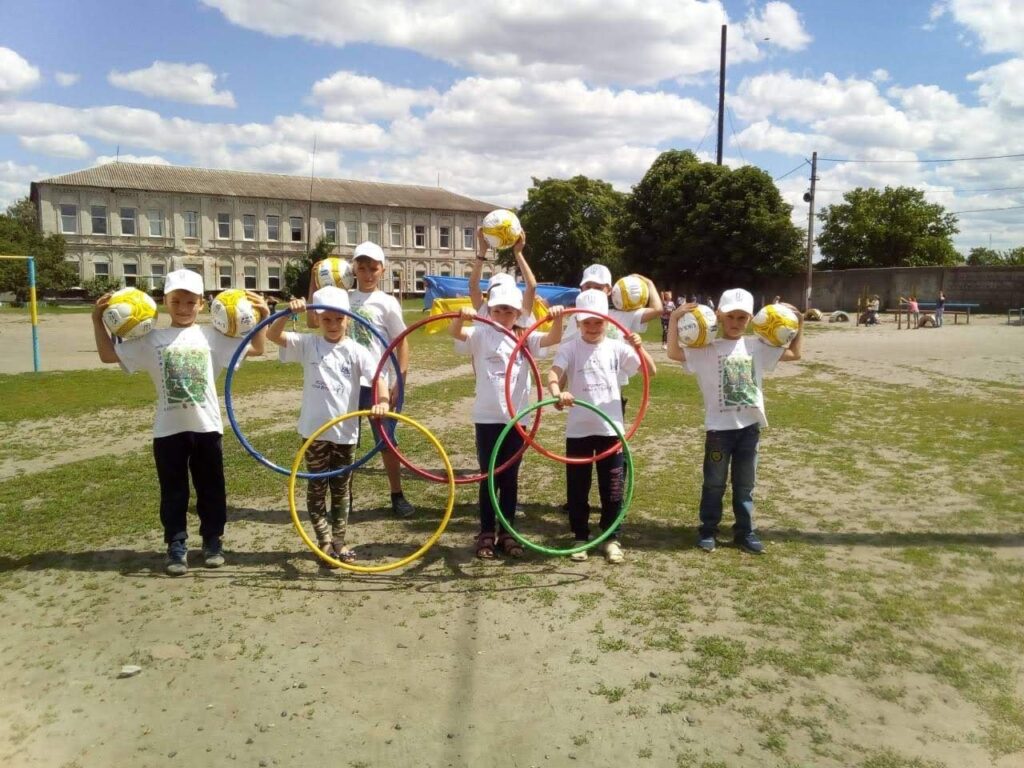
Younger students began to see their teachers differently, too – not simply as authority figures, but as older, trusted friends they could turn to.
“Gradually teachers moved from competing over whose student performed best at the Olympiad towards genuine partnership – not only in developing and discussing activities, but also through observing each other’s lessons, organising integrated activities with parents and participating in volunteer work,” Olena remembers.
And the transformation did not stop there.
Applying the Whole School Approach, the lyceum brought parents and the wider community closer to school life. Parents became involved in decisions about parts of the curriculum, joined lessons and school trips, and sometimes organised activities themselves.
While not all teachers ascribed to the learning methods and initiatives introduced as part of the “Schools for Democracy” programme straight away, it was the school administration’s ambition to systematically spread the EDC/HRE principles to all subjects and all classes.
NO LONGER AFRAID: Olena explains that the younger students stopped seeing their teachers as strict police officers after Merefa joined the programme. (Photo: Merefa Medical Lyceum)
But time stops for no one. A year later Ukraine went into lockdown and in 2022, Russian rockets tore up the sky over Merefa.
30 Kilometres from Kharkiv
Merefa, a small urban municipality close to Kharkiv, has never been occupied by Russian forces. But like the rest of the Kharkiv region, it has been heavily affected by the war and repeated Russian attacks. Homes and infrastructure have been damaged, community facilities destroyed and families displaced.
Olena fled abroad in March 2022. But she did not leave the school behind.
“Merefa has been my school since childhood. I entered first grade in 1979 and never left. Even now, I work online, just like ten other teachers from our school.”
Today, the lyceum officially operates remotely. When the security situation allows, it uses a blended model, with the community shelter serving as a safe space where students and staff can gather.
Of the school’s 556 students, around 100 now live elsewhere – in countries like Germany, Poland and Ireland, or in other parts of Ukraine.
Behind the screen Olena witnesses the impact that years of war and remote learning have had on her students.
“The children’s moods vary. They miss and worry about their fathers who are serving in the Armed Forces of Ukraine. They are afraid to stay home alone when their parents are at work. They are tired of online learning,” she says.
Some children are eager to reconnect with their classmates despite the dangers. Others have withdrawn. Some stop attending lessons or switch off their cameras. Others lose their motivation to study altogether.
Behind each child is a different story.
“Some children have lost parents who were killed defending Ukraine. Some families have had their homes destroyed. Some children have remained in Ukraine with their fathers while their mothers have gone abroad with younger siblings.”
And yet, Olena says, there is one thing that the students have in common.
“Everyone wants to return to school – even those who do not particularly want to study.”
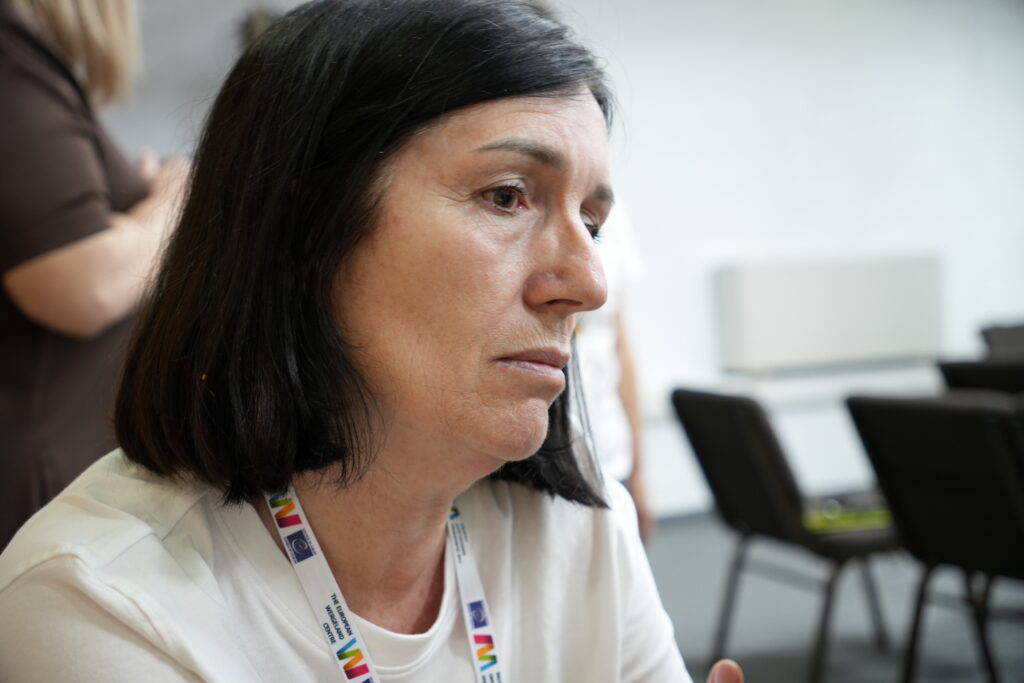
OLENA FROM MEREFA: Today, Olena she splits her time between online classes at Merefa Medical Lyceum and a local Polish school.
Refusing to Disappear
Since the start of Russia’s full-scale war, schools all over Ukraine have become more than places of learning, turning into points of community, shelter and safety. Merefa’s proximity to the Russian Federation and its lack of air raid shelters, however, makes this impossible.
Instead, the school’s teachers are focusing on developing new skills, constantly looking for ways to make online education engaging enough to compete with the distractions of the phone.
Acknowledging that this is a challenge not unique to Merefa, the Wergeland Centre launched the course, “How to Teach in the Digital World”, which helps educators combine traditional teaching methods with modern digital tools.
“We are convinced that an engaging, modern online lesson can captivate children just as much as a game,” Olena says.

“These children show that they want to live their own, albeit war-torn, childhood in an interesting way, and they are working hard to make that happen,” says their mentor, Marina Martinenko.
READ ALSO: “It Completely Changed my Worldview”
In 2018, Merefa Medical Lyceum began its Schools for Democracy journey by admitting that its impressive success hid problems that needed to be addressed.
Eight years later, the school faces challenges nobody could have imagined. But the lessons it learned about listening, cooperation, participation and trust have remained.
Teachers and students continue to find ways to learn together, support one another and remain part of the same community despite war, displacement, loss and uncertainty.
The circumstances have changed.
The school has changed.
But it has not stopped.
The “Schools for Democracy” Programme is implemented by the EWC in cooperation with the Ministry of Education and Science of Ukraine, Center of Education Initiatives, Step by Step Foundation Ukraine and SavED. The programme is funded by the Nansen Support Programme for Ukraine. The Nansen Programme belongs to the Norwegian Agency for Development Cooperation (NORAD).
Visit the programme website at https://www.schools-for-democracy.org/ or https://wergelandcentre.org/countries/ukraine/