
Table of contents
3. Let’s Talk About Maidan: Musical Chairs
This activity can be carried out in a classroom, at school, or in a museum.

Target group: High and middle school students, university students, museum visitors, teachers, and youth workers
Duration: 20-35 minutes
Group size: 8-30 persons
Activity objective
To study the emotional side of controversial issues and their impact on the classroom atmosphere among students or in a particular group
Expected learning results
The participants will:
- Practice dealing with the complexity of controversial issues and the diversity of views on historical events.
- Express their opinions on tricky topics and support them with good arguments.
- Analyze historical facts, especially those related to the Revolution of Dignity.
Description of the activity
Some participants may feel uncomfortable sharing their opinions publicly. Therefore, at the beginning of the activity, it is important to explain that this is a specific exercise in which they are expected to express their thoughts openly on the statements provided. It is also essential to explain the rules to participants—they should speak one at a time and will not be judged for any views they express or do not. Please emphasize that being in this situation helps them recognize and respond to emotions that may arise when discussing controversial issues at school or elsewhere. Additionally, in the final part of the activity, it is essential to briefly describe their impressions and emotions.
1. Prepare at least ten, but no fewer than six, statements for discussion (a suggested list is provided below). Together with the participants, select the most emotional and most likely to interest young people, or a specific group studying the Revolution of Dignity.
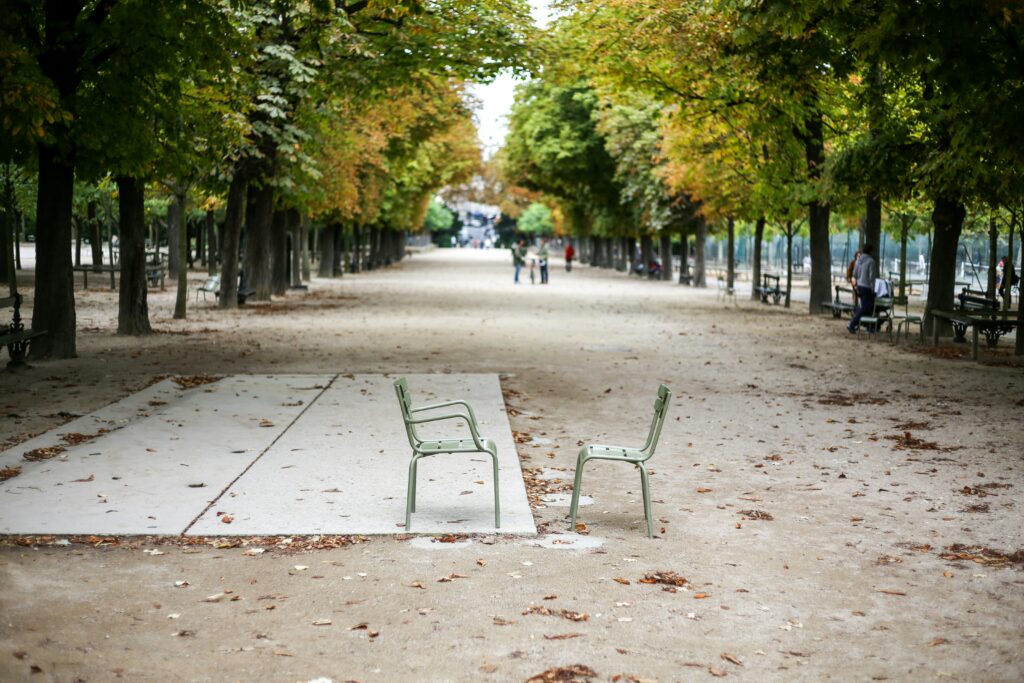
2. In the room, place two chairs opposite each other, each for one participant.
3. Inform participants that they will soon hear a music track. Once the music starts, they should begin walking around the room or dancing, if they wish. When the music stops, they must quickly sit down on the nearest chair so that everyone is paired with another person. At this point, a statement is read aloud. In each pair, the participant who sat down last has 30 seconds to explain their views on the statement to their partner. The partner must remain silent during this time and should not indicate in any way whether they agree or disagree. Then the roles are reversed: the partner has 30 seconds to express their views on the same statement.
4. Play the music again and repeat the process with a new statement.
5. Continue the exercise for as many rounds as you have statements or as time allows.
6. After the final statement, ask participants to arrange their chairs in a circle so that everyone can see one another. Lead a final reflection.
Suggested discussion topics
(We recommend that you create your own topics and/or modify these to better suit the group with whom you are conducting the activity)
For middle and high school students
- People should not participate in peaceful protests. All disputes should be resolved through representative bodies or elections.
- People should not take to the Maidan; instead, they should change themselves.
- The Maidan must have a leader to succeed.
- The right to revolt is not established in the Constitution of Ukraine; therefore, the Maidan is not a legitimate means of defending rights and freedoms.
- Any large-scale protest in Ukraine that opposes the authorities’ actions can be called a Maidan.
- The Maidan is a uniquely Ukrainian phenomenon.
- People go to the Maidan because they are paid to do so.
- The Maidan protests worsened relations with Russia.
- The Maidan is a model of an ideal state based on democratic principles.
For high school and university students
- Citizens should not take to the Maidan for peaceful protests, but should instead try to convey their demands through the state’s representative bodies.
- Protests always lead to confrontation and undermine the authority of the head of state.
- The main cause of the Revolution of Dignity was the beating, by riot police, of protesters who opposed the abandonment of Ukraine’s European development path.
- Law enforcement bodies have the right to use force against peaceful protesters if ordered to do so by their commanders, since they have pledged allegiance to the state.
- Under no circumstances do protesters have the right to resort to violence, such as seizing administrative buildings, throwing paving stones, or using Molotov cocktails against law enforcement officers.
- Young people were the main driving force behind the protests from November 2013 to February 2014.
- The Revolution of Dignity became one of the largest protest movements not only in Ukraine but also worldwide.
- The Revolution of Dignity revealed a divide within Ukrainian society between those who supported European integration and those who envisioned Ukraine as part of a common space with Russia.
- The Revolution of Dignity had a positive impact on the development of a responsible civil society in Ukraine.
- The Revolution of Dignity ended after President Yanukovych fled the country.
- The Revolution of Dignity would not have occurred if Russia had not interfered in Ukraine’s internal affairs.
- Russia would not have started a war against Ukraine if the Maidan had failed.
Reflection

- How did you feel before the exercise began?
- How do you feel now? Why?
- What emotions did you experience during the activity?
- Which parts of the activity were easy for you, and which were difficult? Why?
- Did you always agree with the opinions you heard from your peers during the activity? How did you respond to them?
- What did you learn about discussing controversial issues by taking part in this activity?
- What kind of atmosphere helps people discuss controversial issues openly? How can it be created?
Tips for teachers/ educators
If you notice that the group you are working with finds it difficult to express their thoughts within 30 seconds, allow up to 2 minutes to discuss each statement. Participants may use part of this time, for example, one minute, to think through their response before sharing their opinion. If you have very talkative participants who need more than 30 seconds to express their views, you can allow each person 60 seconds to speak.
Required materials
Recommended music and songs from the time of the Revolution of Dignity
- Okean Elzy, Vstavay!
- Kozak System, Brat za Brata.
- Horila shyna, palala (folk song)
- Horila bochka, dymila (folk song)
- Taraka, Podaj rękę Ukrainie.
- Lyapis Trubetskoy, Voiny sveta.
- Music by Virginijus Pupšys, lyrics by Anastasia Dmytruk, performed by a Lithuanian band Nikogda my nie bud’yem brat’yami.
- Zlata Ognevych, Pray For Ukraine.
- Michael Shshur, Hitarnyi perebor.
Authors/Copyright
Lesia Onyshko, Kateryna Romanova
This activity is based on the Musical Chairs activity from The Council of Europe’s training pack, Living with Controversy: Teaching Controversial Issues Through Education for Democratic Citizenship and Human Rights (EDC/HRE), 2015 (see https://edoc.coe.int/en/human-rights-democratic-citizenship-and-interculturalism/7738-teaching-controversial-issues.html)