
“When the Youth Council Speaks, Everyone Puts Their Phones Away”
In their small municipality in Western Norway, Kvam Youth Council is devoted to local politics. But this time, the journey took them to Utøya, where youth councils gather to strengthen their democratic skills. Joining them was an unusual participant: the mayor.
By Veslemøy Maria Svartdal
“When I was young, I was politically engaged too, but I would’ve never have gone near a municipal council,” the Mayor of Kvam Municipality, Torgeir Næss, laughs.
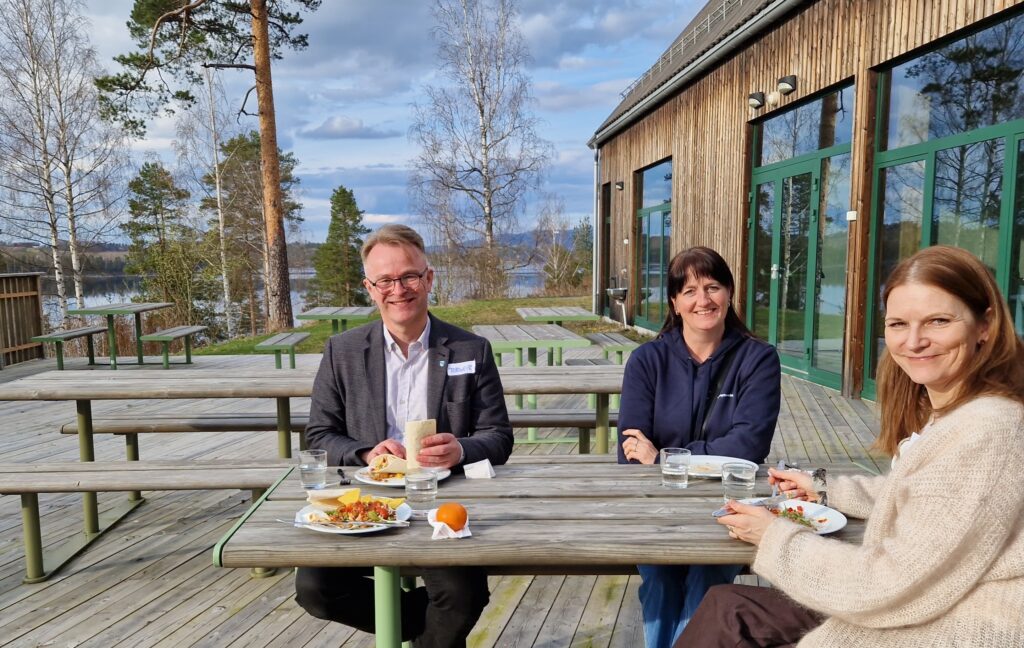
Back home in Kvam, a long, narrow, fjord-side municipality on the westcoast of Norway, the Mayor is used to meet the Youth Council in the Municipal Council Chamber. This time, however, they met in a very different setting.
When the Youth Council signed up for the Democracy Workshop at Utøya, the mayor decided to come along.
“Utøya is a fascinating place for a democracy workshop. And it’s a real pleasure to spend time with the Youth Council,” he says.
Democracy in Practice
Since 2019, all Norwegian municipalities have been legally required to have a youth council – a formal advisory body that ensures children and young people have a voice in matters that concern them.
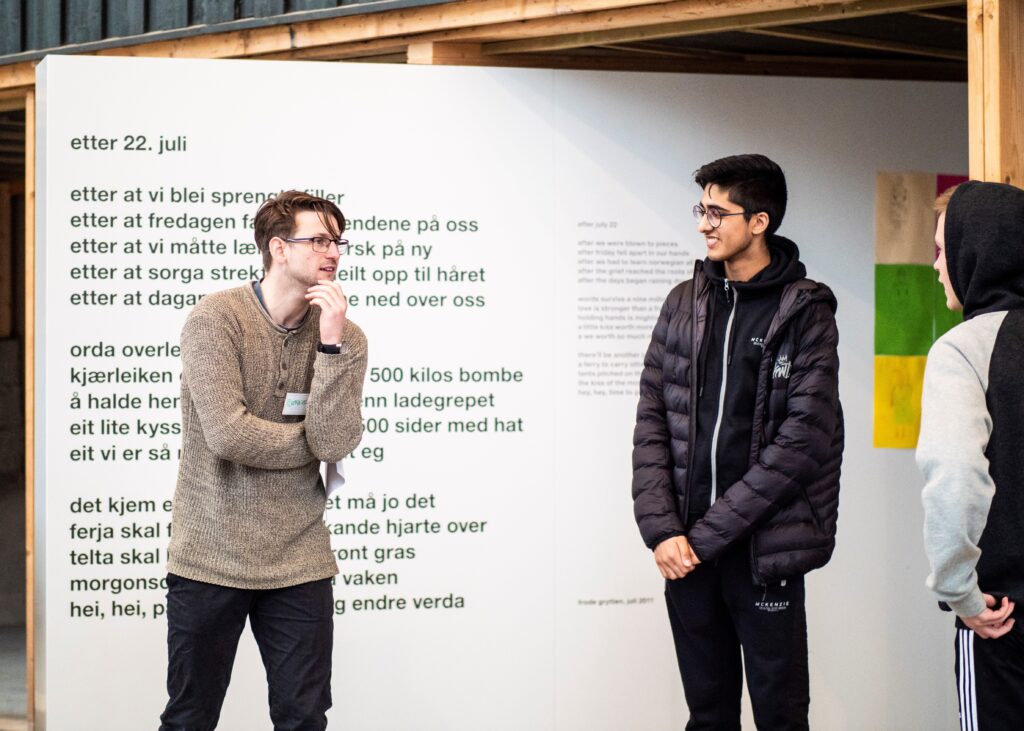
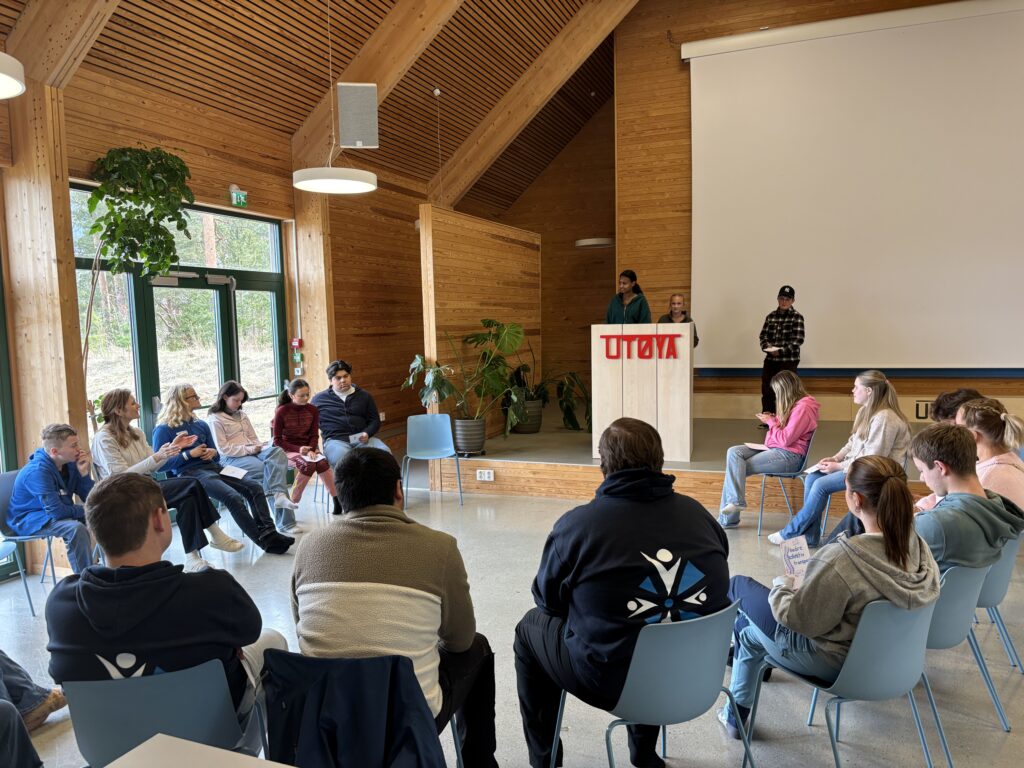
That same year, the European Wergeland Centre and Utøya launched the Democracy Workshop for Youth Councils. During an intensive weekend in Oslo and at Utøya, young council members receive training in public speaking, handling disagreement and manipulation techniques, identifying challenges in their local communities, and developing solutions.
Just as importantly, they meet youth councils from other parts of Norway.
READ ALSO: 10 Years of Democracy Workshops for Students and Teachers
The programme is free of charge and supported by the Savings Bank Foundation DNB through the project Youth who Change the World.
The Youth Council travelled to Utøya in force. Nine of the council’s thirteen members attended.
“It was actually quite funny, because bringing the mayor wasn’t part of the original plan,” laughs council member Sondre Fagerheim Lunestad. “But he wanted to join us, and we really appreciated that. It’s great that he’s genuinely interested in what we do.”
Emilie Geist, advisor at the European Wergeland Centre and coordinator of the Democracy Workshop for Youth Councils, is impressed by the strong cooperation between the youth council and local politicians in Kvam:
“Meaningful participation in youth councils depends on elected representatives genuinely listening to young people and being easy to approach. The fact that the Mayor of Kvam joined the council at the Democracy Workshop reflects a curiosity and openness towards young people that other municipalities and elected representatives could learn from.”
Learning to Disagree
For the Youth Council, the trip was first and foremost about becoming better youth politicians.
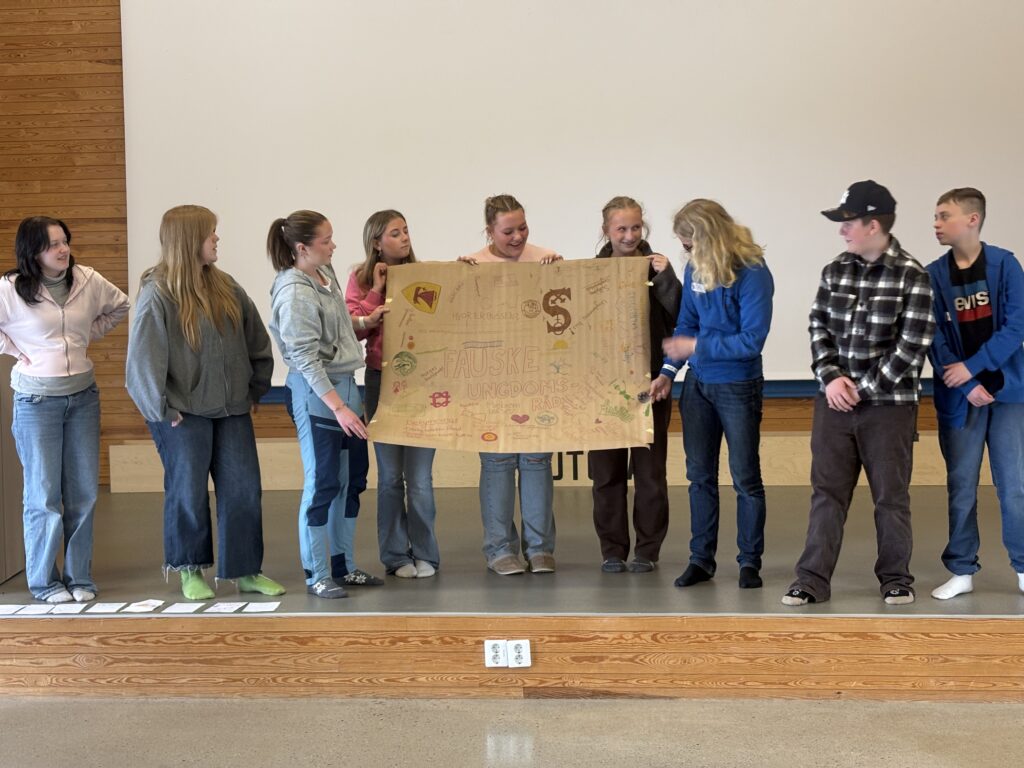
Throughout the weekend, participants reflected on how much real influence they have in their own municipalities. They also practised debating, conflict resolution, and responding to manipulation techniques through role-play exercises.
“Some people were assigned the role of interrupting others and behaving disrespectfully. That’s not something we can really relate to in our own council, but it was very useful to experience firsthand how important it is that everyone treats each other with respect,” says Sondre.
Mayor Torgeir took on the role of observer.
“In situations like this, it’s best to let the youth take full ownership. Adults—and especially adult politicians—shouldn’t interfere,” he says.
The Mayor says it is always inspiring to watch the Youth Council in action, but that the setting of the Democracy Workshop made this experience particularly memorable:
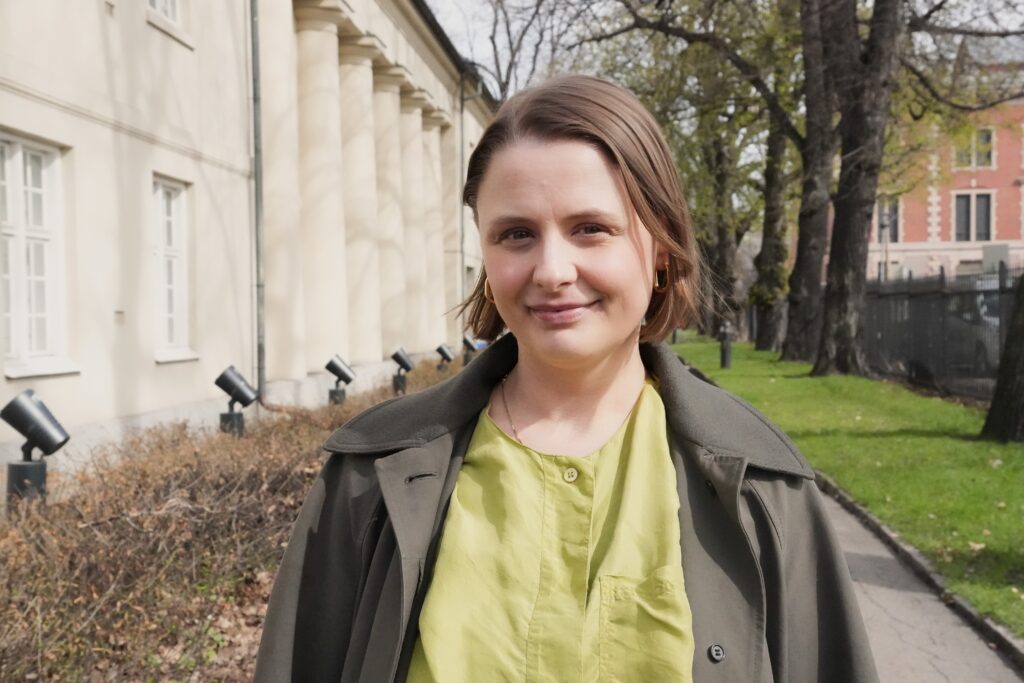
“Seeing the places whose names I remember from 22 July terrorist attacks, and then seeing the work these young people were doing there—that was one of the strongest experiences I’ve ever had. I noticed it when I drove some of them home. They were incredibly inspired.”
Defending What We Have
The mayor was not the only one moved by the location where the Democracy Workshop took place.
“It’s a very powerful story,” says Council Member Signe Vik. “We were very young when it happened, but we’ve learned about it in school and through movies and stories. Being there made a strong impression. It felt a little surreal. I remember thinking: ‘I’m standing where it actually happened.’”
None of the youth council members have personal memories of the 22 July 2011 terrorist attacks. Everything they know has come from school, documentaries and other people’s stories.
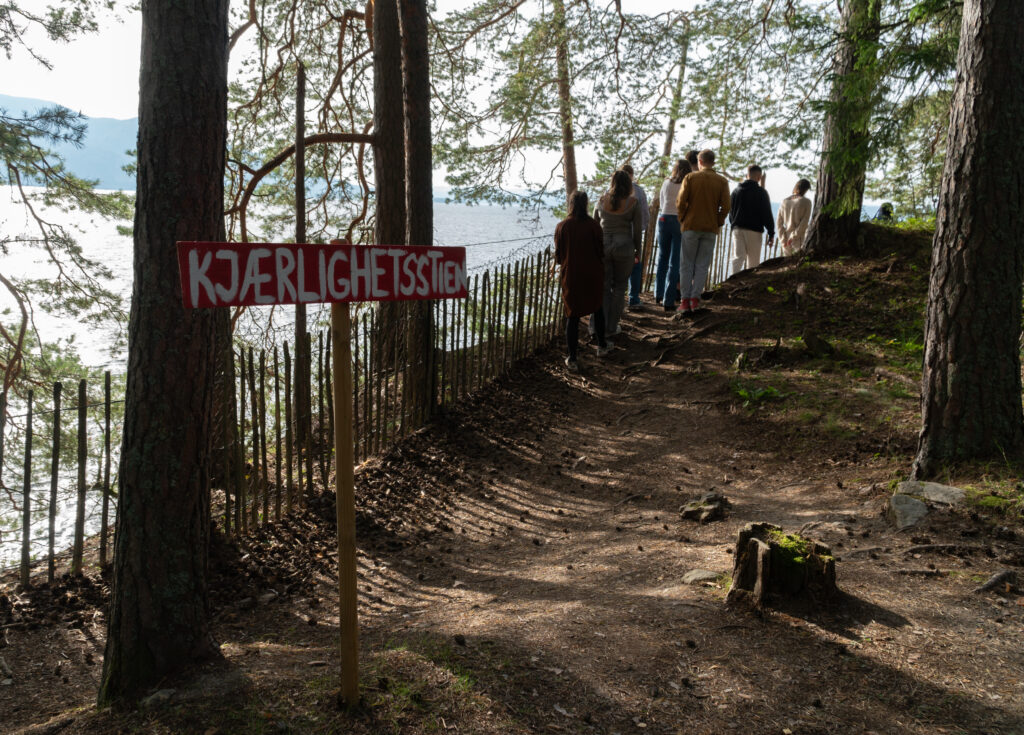
“Taking the MS Torbjørn ferry to the island, walking along the Love Path, and entering the Café Building—it gave us a completely different feeling from the one we had before. I think it really reinforced why we were there and how important it is to defend what we have,” says Sondre.
A Youth Council That Matters
Kvam Municipality, named Norway’s Youth Municipality of the Year in 2023, has long taken youth participation seriously. A dedicated youth body within local politics was established as early as 2002.
Today’s Youth council consists of representatives from across the long, narrow municipality. Once a month they meet to discuss the agenda for the upcoming municipal council meeting.
And this is no playhouse council.
The young representatives write their own minutes, manage their own budget, and adopt formal statements and recommendations on behalf of the municipality’s approximately 1,300 children and teens.
The council members believe that access to courses, workshops and training is absolutely essential for youth councils to be a force to be reckoned with.
“It’s often crucial—not only because it gives you confidence in yourself and in speaking up, but also because it helps you understand the situation you’re in,” says Council Member Markus Fosse.
The young representatives are also grateful to have local politicians and a municipal administration that actively support their work.
“We have a permanent representative and a deputy from the Municipal Council at every meeting. They don’t have voting rights, but they listen to us and are to answer any questions we might have. That gives us an excellent relationship with the Municipal Council, where we also have the right to attend meetings and speak,” explains Sondre.
“And they are not afraid to use that speaking right!” the mayor adds with a smile. “When they’re speaking during Municipal Council meetings, nobody looks at their phones. Every politician is paying attention.”
Building Strong Communities
The main goal of the Kvam Youth Council is to create meaningful meeting places and activities for young people in order to prevent exclusion and social isolation.
“We want to build stronger communities—both among young people themselves and between young people and adults. We want to make sure young people’s perspectives are heard and reflected in the municipality,” says Sondre.
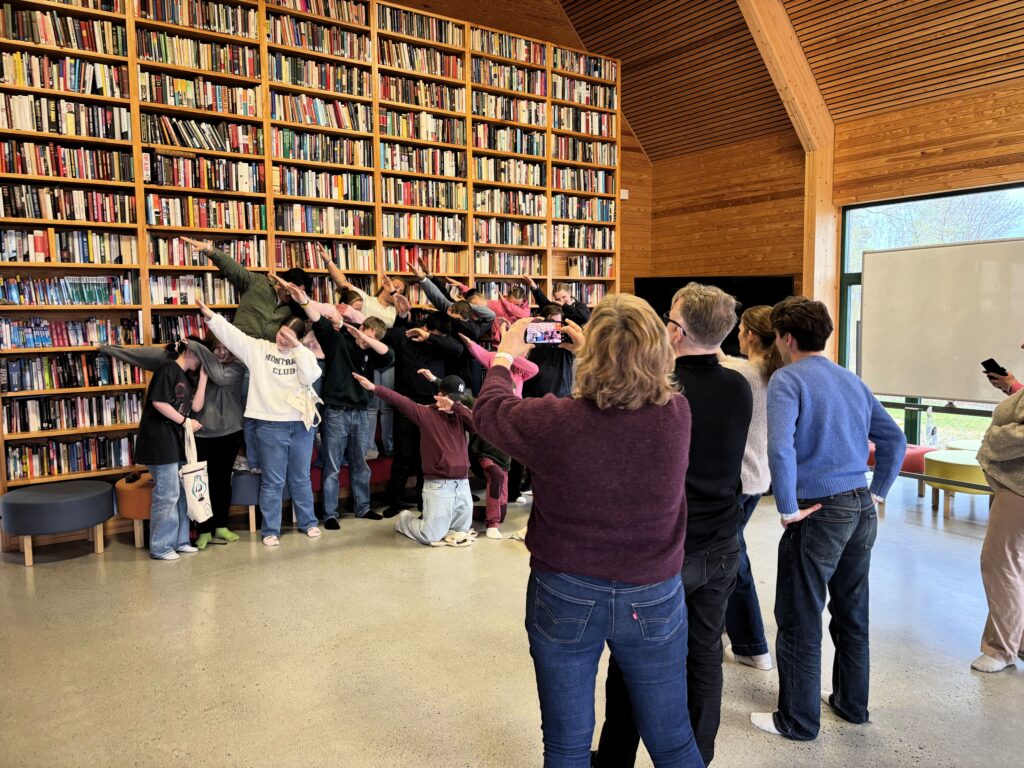
Signe recalls one of the highlights from last year’s conference, when she and other students from the local School of Music and Performing Arts taught participants the Kvam Dance—a local dance that has become something of a trademark for the municipality.

At Utøya, the group met Fauske Youth Council, with whom they quickly became friends and have stayed in touch after returning to Kvam.
Naturally, they also taught them the “Kvamma Dance”.
“It’s nice to show who we young people from Kvam are and what we can do,” Signe smiles.
Laying a Foundation for the Future
At a time when municipalities across Norway are facing financial pressure, the Youth Council is working hard to ensure that Kvam remains a great place for young people in the future.
“Having activities to do in your free time is really important. We’re very fortunate to have so many opportunities in our municipality, and it’s our job in the Youth Council to help preserve them and keep thinking about what young people actually want,” says Sondre.
The Mayor believes that student councils and youth councils are excellent learning places for both democracy and political leadership.
“They don’t always get their way, but that’s also part of democracy,” he says.
“Sixty years from now, the people who are sixty today won’t be here anymore—unless some of them are exceptionally good at staying alive,” Sondre smiles. “We’re the ones who will take over society in the future. So being allowed to help lay the foundation for the kind of society we want is actually essential if society is going to function.”
Youth Who Change the World is supported by the Savings Bank Foundation DNB