Young People Take the Lead in Building Inclusive Schools in Moldova

Amid economic pressures and disinformation, young people across the Republic of Moldova are learning that inclusive classrooms and active voices are key to building stronger democracies.
In 2025, The European Wergeland Centre partnered with the Step by Step Educational Program to expand the Centre’s long-running “Schools for Democracy” programme. The initative has been extended to not only include democratic school reforms in Ukraine, but also the development of inclusive classrooms and participatory school governance in the Republic of Moldova.
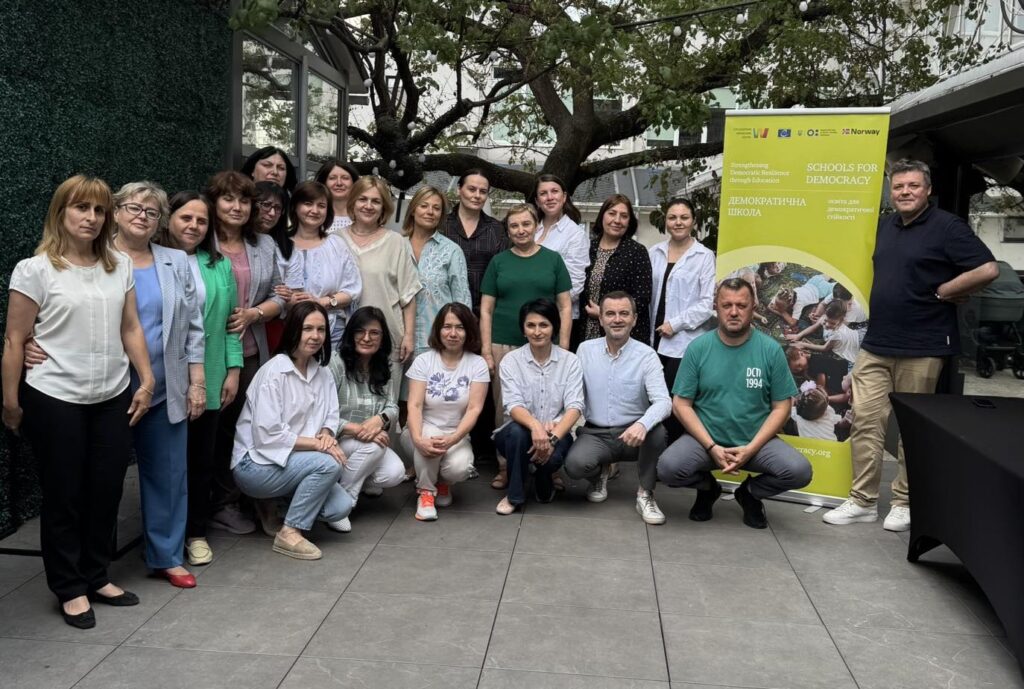
In 2025, school leaders, teachers, students and parents from 18 schools across the country gathered in Chișinău for a three-day workshop focused on creating safe and inclusive learning environments – especially for disadvantaged and vulerable students.
Participants were also introduced to the Whole School Approach, which encourages students, staff, parents, and the wider community to work collaboratively to build democratic learning environments.
Following the workshop, each school was tasked with implementing concrete measures to strengthen inclusion and democratic participation. To support this work, schools partake in webinars and receive ongoing guidance from trainers in the Step by Step network, who, as part of the project, completed a specialised training led by Wergeland Centre experts Andriy Donets and Marius Jitea in Chișinău.
PHOTO: Marius (seated in green shirt) and Andriy (standing to the right)
“Our project complements the reform efforts which are already taking place in Moldova,” says Marius.
He explains that by creating an environment of trust and a place where young people felt comfortable, the project was able to create an honest and truthful participatory process between teens, parents and school representatives.
“Young people in the Republic of Moldova are now, more than ever, eager to commit and get involved, so the implementation will not just be “for them” but “with them.” The topics discussed were those identified by youngsters as being the most important ones for their needs,” Marius says.
One of the participants was 15-year-old Gabriel Frei, was unexpectedly reunited with the head of his former primary school, Pas cu Pas, during the seminar in Chișinău. Passionate about democratic development and participation, Gabriel decided to visit his former school to speak with the Journalist Club about the importance of democracy.
“I decided to meet with younger students because I believe that democratic values should be learned from an early age,” says Gabriel.
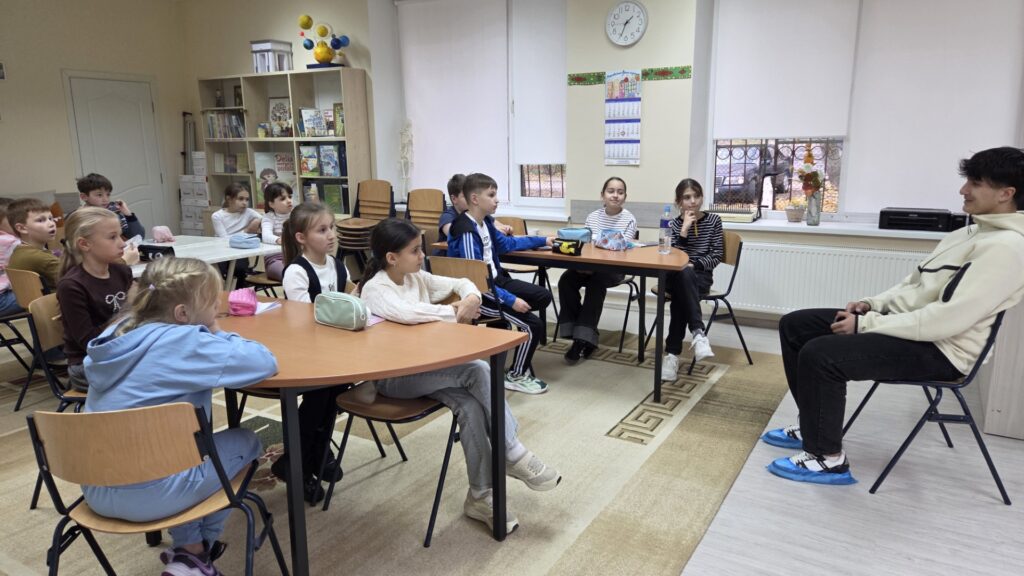
“Children are naturally curious, open-minded, and willing to discuss fairness, rights, and responsibilities. By introducing these concepts early, I wanted to help them understand that their voice matters and that they can contribute to a positive school environment,” says Gabriel, who used to be a member of the Journalist Club himself.
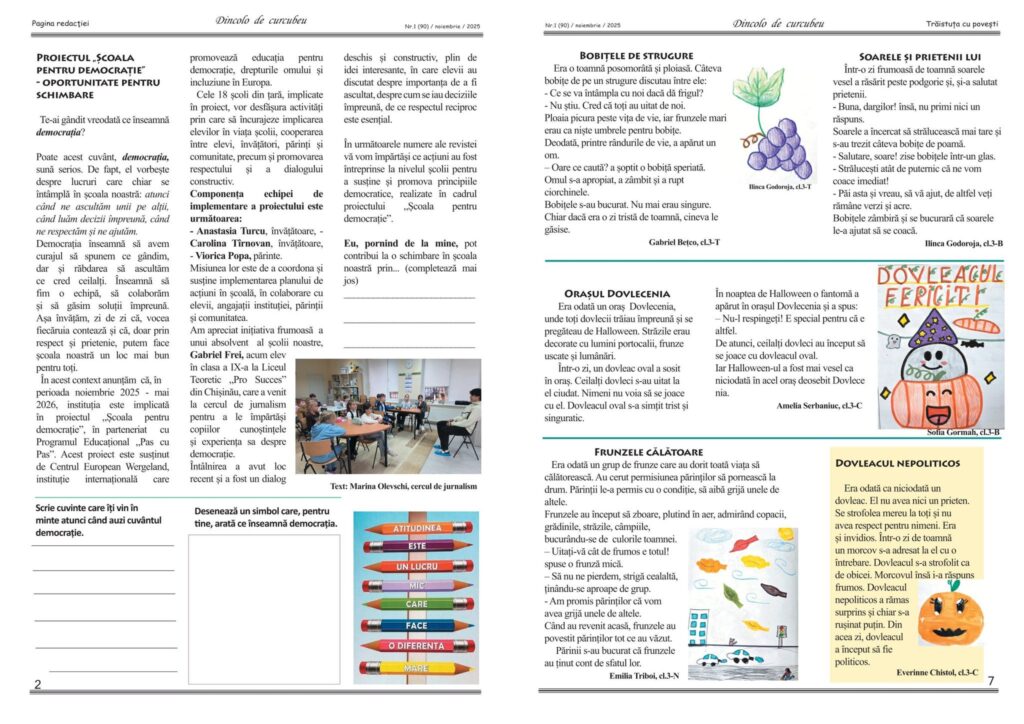
Gabriel’s visit left an impression. In its November issue, the Pas cu Pas school newspaper Over the Rainbow invited readers to reflect on what democracy truly means, featuring drawings created by students illustrating their own interpretations of democracy.
20 more Moldovan schools will join the expanded Schools for Democracy programme in 2026.
The “Schools for Democracy” Programme is implemented by the European Wergeland Centre in cooperation with the Ministry of Education and Science of Ukraine, Center of Education Initiatives (Lviv), Step by Step Foundation Ukraine (Kyiv), SavED (Kyiv) and Step by Step Moldova (Chisinau). The programme is funded by the Nansen Support Programme for Ukraine. The Nansen Programme belongs to the Norwegian Agency for Development Cooperation (NORAD).