
The Quiet Transformation Inside Ukraine’s Schools
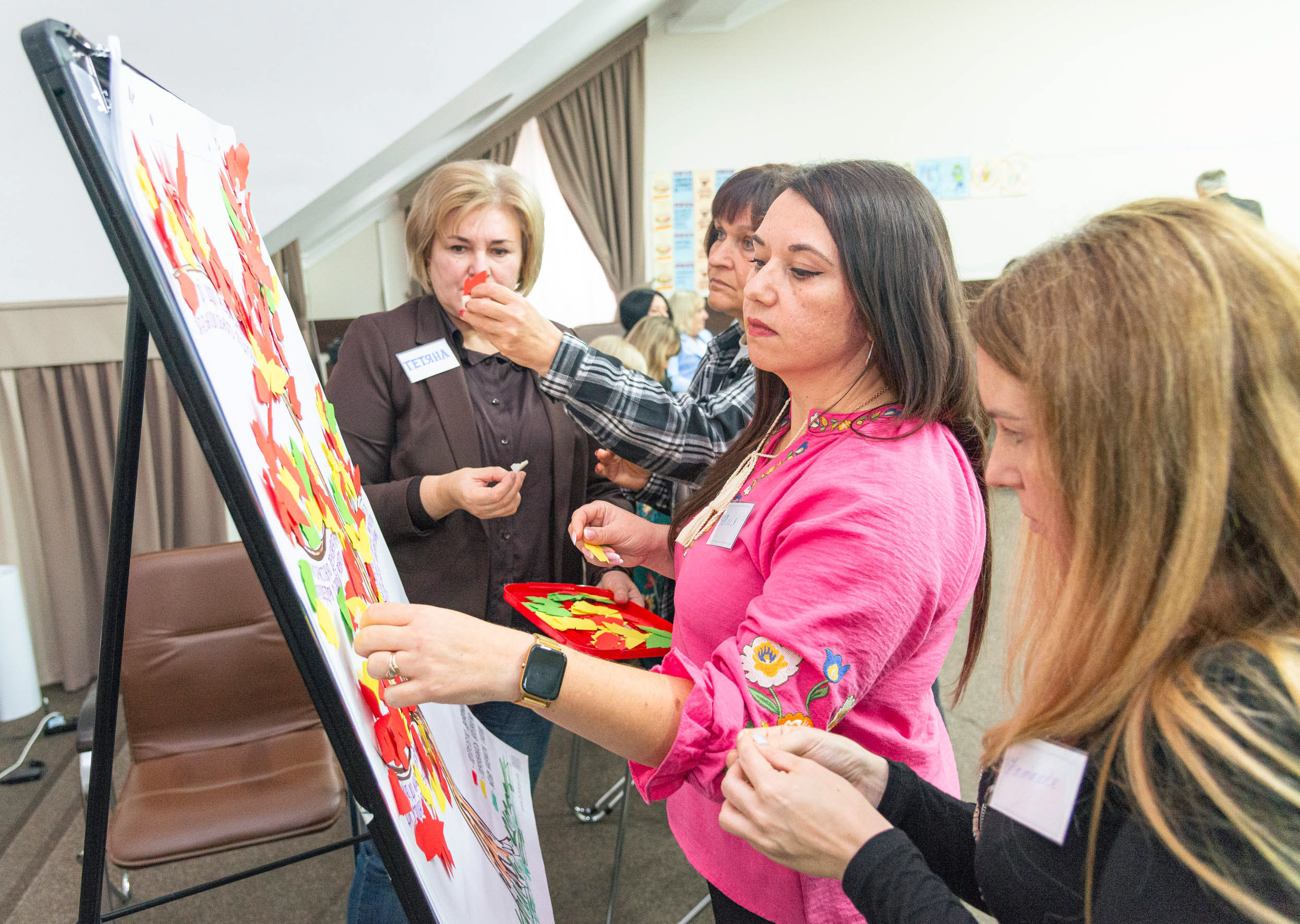
Can a school truly change for the better – even in times of war? Schools across Ukraine are rethinking how they function – from the inside out. By bringing teachers, students and parents into decision-making processes, a growing number of schools are proving that democratic change is possible.
“Children, teachers and parents alike can have many valuable ideas, but prejudice or a lack of awareness of their own influence, prevents people from taking an active role in school life,” says Lyubov Denysiuk, headmistress of Lugovskyi Family Gymnasium in western Ukraine.
Her belief in the power of participation led the school to join one of the European Wergeland Centre’s newest projects, the Organisational Development for Democratic Recilience programme, which offers tailored courses for school heads and teachers on how to make schools more inclusive, how to integrate civic competences into individual subjects, and how to promote civic engagement among students.
By the time the programme launched in October 2025, schools across Ukraine were already operating under extraordinary pressure. War had reshaped daily life. Stability was fragile. And yet, inside schools, another question was emerging:
How do you build something better, even now?
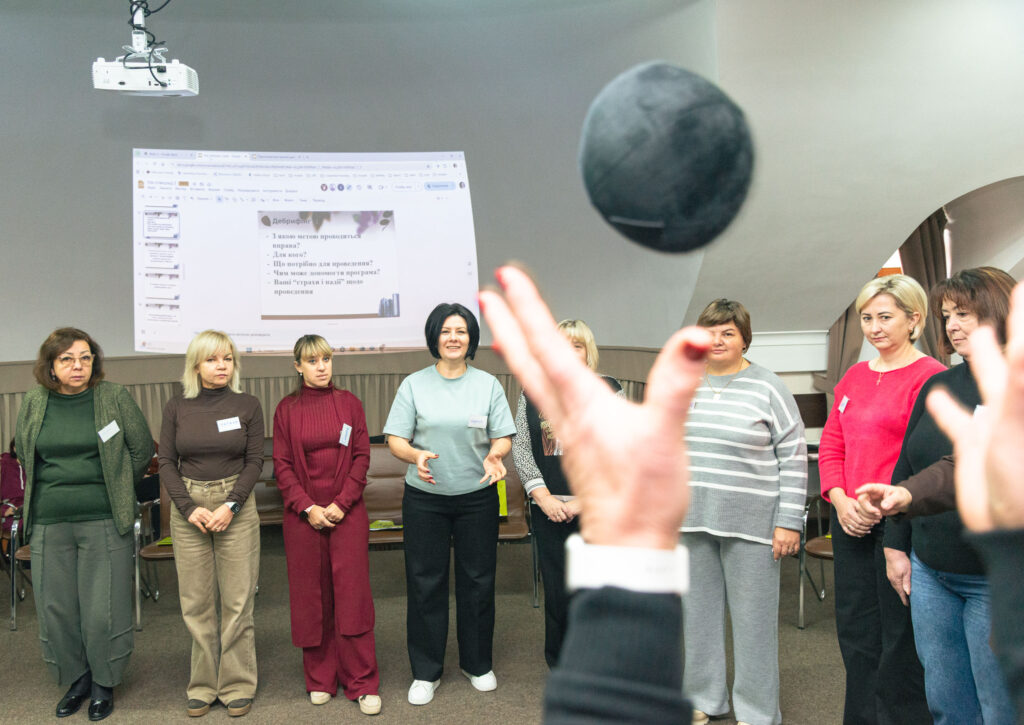
The programme – built on years of experience through the Centre’s Schools for Democracy initiative – offered a way to rethink that system from the inside out. It began with special training sessions for school administrations, before expanding to the entire teaching staff who were introduced to the Tool for Democratic School Development, created by the Wergeland staff.
Later they were enrolled in online blended courses on how to build a democratic learning culture and prevent cases of hate speech. While voluntary, most teachers across participating schools decided to join.
Lugovskyi Family Gymnasium was one of 29 schools taking part.
“A democratic culture isn’t about one person or position – it’s about the whole system. That’s why we joined,” Lyubov explains.
A Moment of Change
After attending training sessions in Lviv, participating schools began developing their own strategies for democratic growth, guided by the Centre’s extensive network of local trainers, and based on tools developed through the Schools for Democracy programme.
These strategies focus on strengthening cooperation between teachers, students, parents and local communities, while supporting professional development and launching school-led initiatives.
The turning point at Lugovskyi didn’t come during a formal training session. It came in a room filled with parents and students.
Lyubov and her deputy had introduced staff to the programme’s core concepts, and with support from trainers, the school organised a workshop using the Tool for Democratic School Development, which offers guidance on how teachers, students, parents and administrators can plan for democratic development together.
At first, there was hesitation.
Then, gradually, people began to speak.
“Often the problem isn’t unwillingness, but a lack of communication. Some parents simply didn’t know how to get involved,” the headmistress explains.
“Parents told us: ‘You do so much.’ And we realised – we had always done these things. We just hadn’t been communicating it clearly enough.”
The process helped parents better understand how the school operates – and how they can influence it.
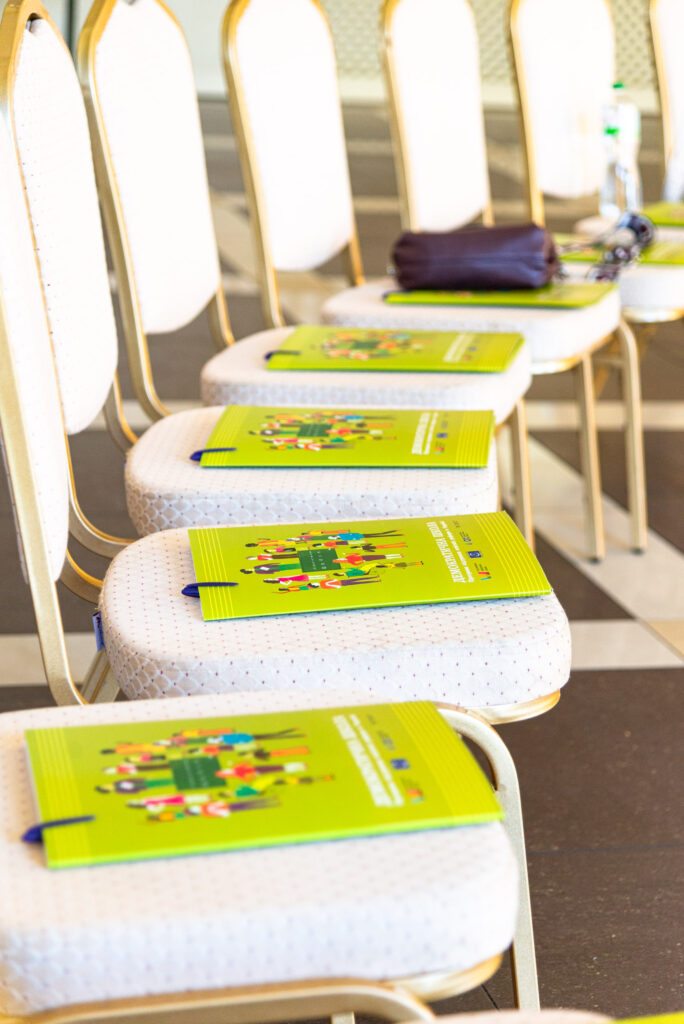
Not Just a Place for Learning
In the months that followed, something shifted inside the school.
In the staff room, conversations became more animated. Teachers debated new new ideas, tested unfamiliar methods, and reflected on the training and courses together.
“It’s lovely to see that colleagues aren’t just listening, but are actually putting the new ideas into practice,” says Lyubov.
The students changed too.
They spoke more. Questioned more. Suggested more.
And slowly, adults began to listen differently.
“A school can become more than a place of learning,” Lyubov says. “It can be a community where people listen to each other, where no one is afraid to speak, and where decisions are made together.”
Not Knowing Where to Begin
When the headmistress of Odesa City Council’s ‘Leader’ Lyceum, Iryna Bolgarina signed her school up for the programme, she had doubts.
A lot of them.
Would they be able to cope with the workload? Was the staff ready? Would this just be another project resulting in nothing?
“But there was another feeling too: that we were a bit ‘stuck.’ We wanted change, but didn’t fully understand where to start. We had active teachers, we had demand from parents, but what was missing was a systematic approach – how to turn individual practices into a lasting culture,” says Iryna.
The programme provided exactly that: an external perspective, practical tools, and sustained support.
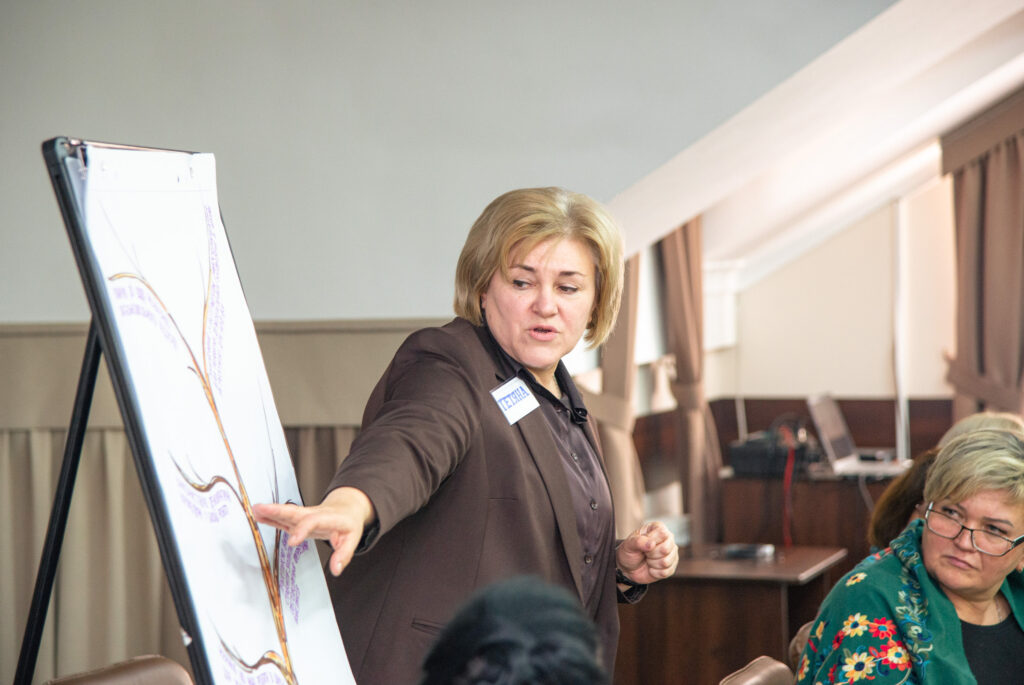
“The trainers understand the school context, so their advice isn’t abstract. Though the journey was not easy, as the programme requires time and honesty with oneself, the result is worth it. This is not just another webinar. This is systematic work over a period of 18 months,” says Iryna.
After having met with school heads from other schools during the training, she found reassurance in discovering that other schools across Ukraine face similar challenges – from resistance to change to limited resources and staff fatigue.
“Realising you’re not alone, alleviates the feeling of isolation,” she says.
Not Just a Slogan on the Wall
Six months later, the changes are visible.
The student council has become an active force, influencing rules and initiating projects. Staff meetings are more open and participatory, and regular surveys now gather input from pupils, parents and teachers – with results discussed transparently.
Collaboration among teachers has also improved.
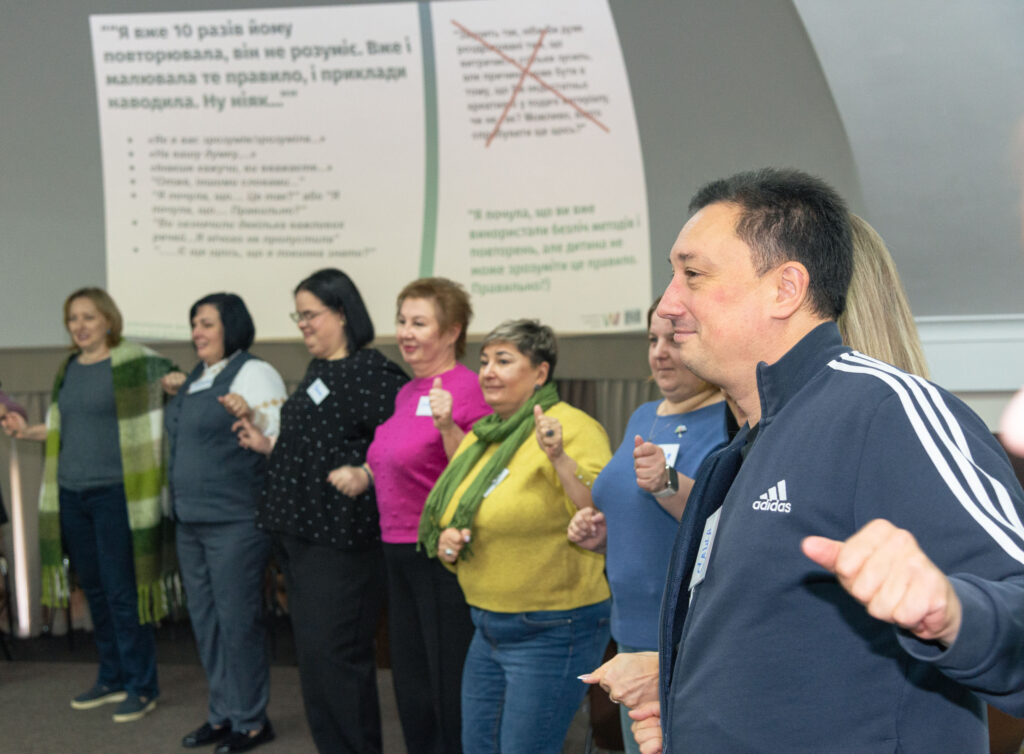
“There are fewer obstacles and ‘closed doors’ and a greater willingness to try new things,” Iryna says.
The headmistress believes it is vital to involve the whole staff in making the decision to join the programme:
“If only the headteacher supports the initiative, change won’t take root. Without the participation of the staff, democracy remains nothing more than a slogan on the wall.”
After working dedicatedly on the programme, Iryna senses that a real community has emerged, breaking down barriers and building collegial trust.
“My advice is: don’t wait until everything is perfect. Start with what you have. There will never be a perfect time to join the programme. War, remote learning, staff turnover – all these are reasons not to put development on hold, but rather to speed it up,” concludes the headmistress.
In 2026, a further 30 schools will join the project.
The ‘Organisational Development for Democratic Resilience’ programme started in 2025 and will run until 2026, as part of The European Wergeland Centre’s Schools for Democracy programme, in cooperation with the Centre for Educational Initiatives.
The “Schools for Democracy” Programme is implemented by the European Wergeland Centre in cooperation with the Ministry of Education and Science of Ukraine, Center of Education Initiatives (Lviv), Step by Step Foundation Ukraine (Kyiv), SavED (Kyiv) and Step by Step Moldova (Chisinau). The programme is funded by the Nansen Support Programme for Ukraine. The Nansen Programme belongs to the Norwegian Agency for Development Cooperation (NORAD).