“It Completely Changed My Worldview”
How Youth Are Rebuilding Wartime Ukraine
By Veslemøy Maria Svartdal
Russia’s full-scale invasion of Ukraine in 2022 triggered Europe’s largest refugee crisis since the Second World War, with millions of Ukrainians – many of them young people –seeking temporary refuge in cities and small towns across the continent.
At the same time, millions of children and teenagers never left the country and continue to grow up amid war.
In 2023, the European Wergeland Centre partnered with the Ukrainian organisation savED to support teenagers in rebuilding and bringing life back to the liberated areas formerly occupied by Russian forces.
One such village is Shpytky.
PHOTO: Viktor Ohneviuk/Wikimedia Commons
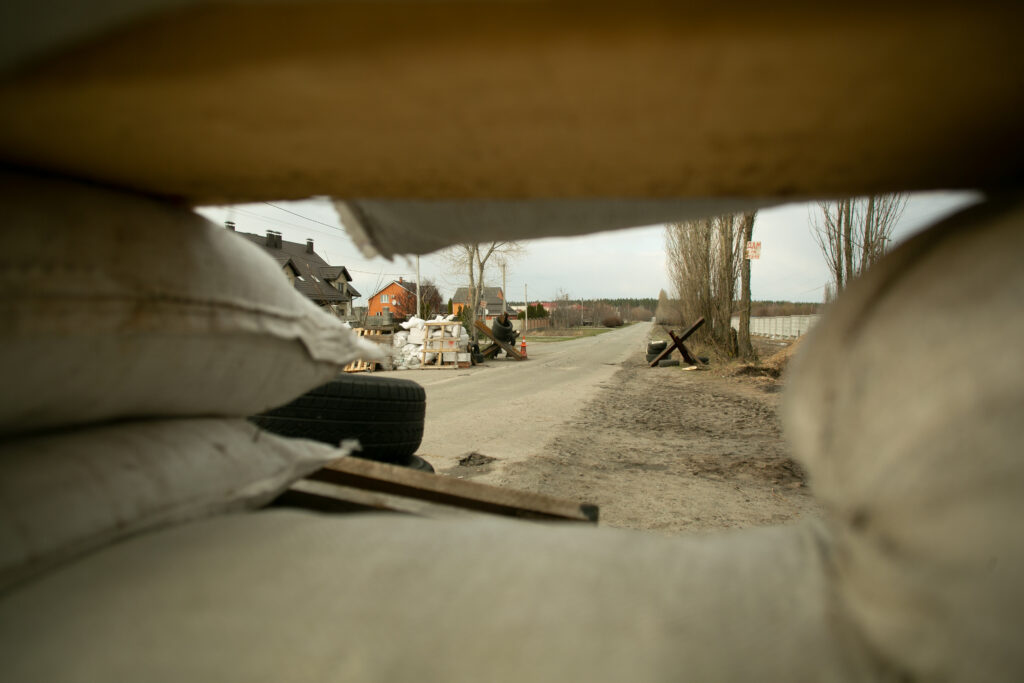
Located just outside of Kyiv, the village found itself on the frontline when Russian forces attempted to advance towards the capital. After weeks of heavy artillery fire, the invading troops withdrew, leaving behind damaged homes, unexploded ordnance, and a long recovery process for its 2,300 inhabitants.
“One of the most painful moments was when a Russian shell landed near our school, shattering windows, damaging classrooms, and blocking the entrance to the gym,” recalls local teenager, 16-year-old Taras. “For us, this building was not just a place to study – it was the heart of village life.”
Choosing Action Over Despair
Rather than giving in to despair, Taras and his friends chose to act. They united to clear rubble, support neighbours, and bring life back to Shpytky.
“Volunteering became second nature to us,” Taras says. “We wove camouflage nets near the lyceum, organised fairs, and raised funds for the Ukrainian army. Many of these initiatives started even before the UActive programme arrived in our community.”
UActive is savED’s youth initiative, providing funding and technical support to young people who want to improve their local communities. Through mentorship programmes, leadership training, and guidance on working with local authorities and private companies, UActive helps youth find purpose during wartime while developing skills to rebuild their country.
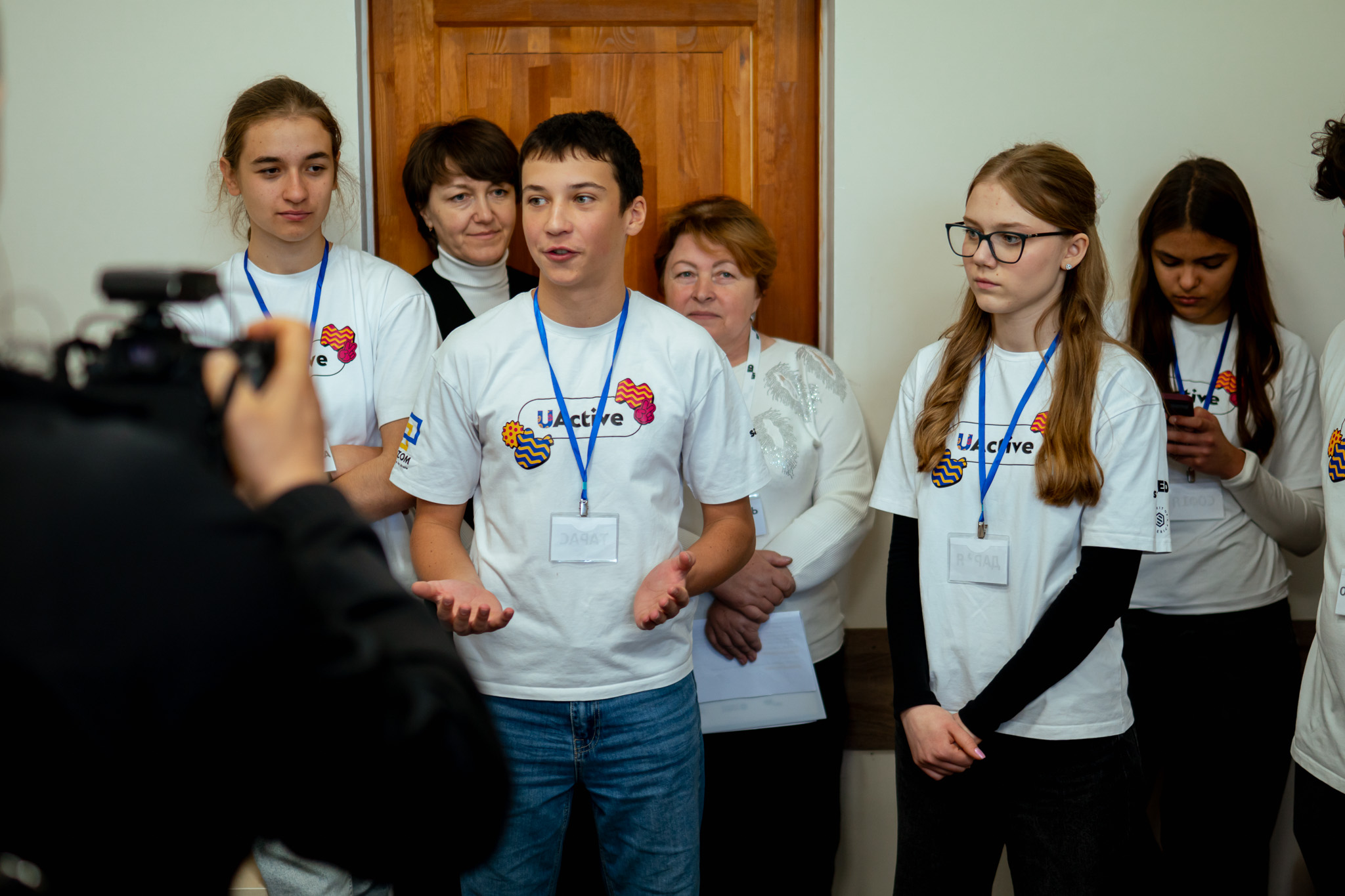
The media was present on the grand opening of the 3D printing club. Photo: UActive
Through its cooperation with savED, the Wergeland Centre has supported 31 local communities across Kyiv, Chernihiv, and Mykolaiv, involving 200 participants with an average age of 15.7 years, as part of its Schools for Democracy – Strengthening Democratic Resilience through Education initiative in Ukraine.
“It completely changed my worldview,” Taras says, reflecting on his involvement with UActive and the Wergeland Centre.
From Recycling to Social Enterprise
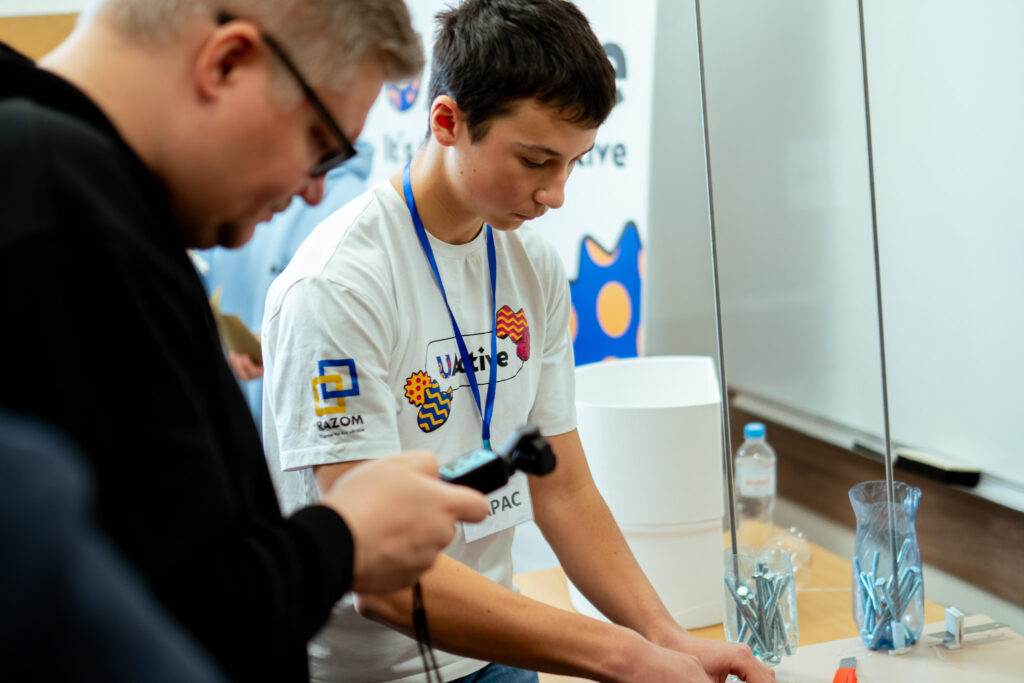
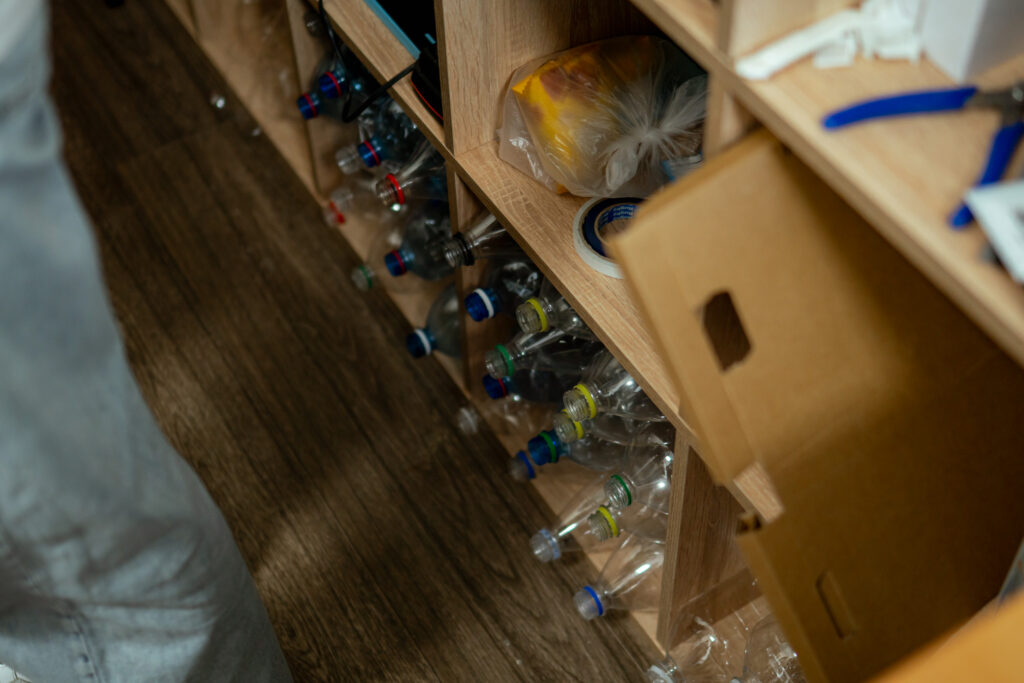
Taras and his friends wanted to do something about the village’s recycling problem. That’s when they came up with the idea of a 3D printing club that transforms plastic waste into 3D-printed products. Having been awarded a $5,000 grant, their first product was an obvious choice: waste baskets to be distributed around the village.
With a $5,000 grant, Taras and his friends were able to start their 3D printing club.
PHOTO: UActive
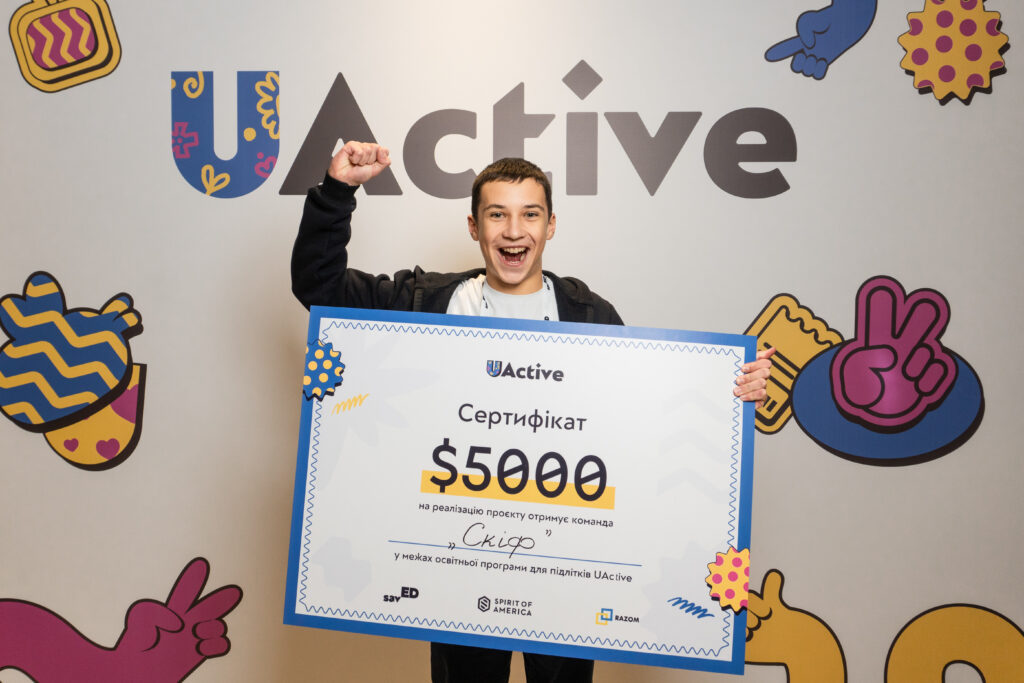
“That was the beginning of proving that young people from small, war-affected communities can innovate, rebuild, and dream – even in the most difficult circumstances,” Taras explains.
Though often challenging, as the teens needed to learn new technologies, source materials, and convince adults that recycling could work in such a small rural area, the project developed. It is now a small social enterprise producing practical items for the community, as well as anti-stress toys to sell online – with the profits going back into the club.
“People began contacting us with individual requests – from personalised household items to assistive devices for war veterans undergoing rehabilitation,” Taras says. “Knowing that something we designed could help someone recover or make daily life easier gave us new motivation.”
Other youth-led initiatives supported by the European Wergeland Centre include community gyms in Myrcha and Mykhailo-Kotsiubynsk, a playground in Baryshivka, and the restoration of a schoolyard in Shkarivka.
The club members repurpose empty plastic bottles to make their products. PHOTO: UActive
Adapting to Wartime Conditions
Through its Schools for Democracy programme, the European Wergeland Centre has supported democratic reform in Ukraine since 2014, primarily focusing on teachers and educators. The full-scale invasion in 2022, however, required the Centre’s Ukraine team to think anew and adapt the programme to the realities of war.
Many Wergeland Centre trainers in eastern and central Ukraine were forced to flee west. In response, the Centre established Mobile Youth Groups, enabling the trainers to use their skills to support refugee children and teens integrate into new communities.
This experience underscored the importance of engaging young people directly, prompting an expansion of the programme to include youth-focused initiatives.
PHOTO: UActive
Investing in Ukraine’s Future
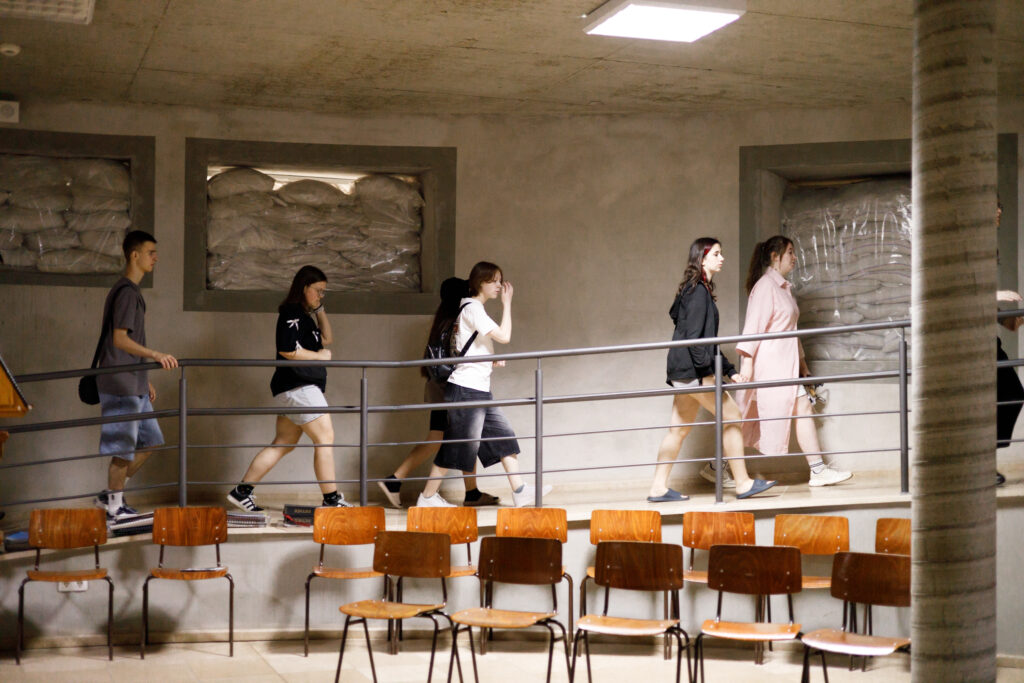
Growing up during wartime forces Ukrainian children to mature quickly. Missile strikes, blackouts, injuries or loss of family members, disrupted sleep, and long hours spent in bomb shelters have become part of everyday life.
According to savED research, just over half of Ukrainian teenagers want to remain in their home country, while the rest are considering moving abroad or remain uncertain about their future. Many struggle with motivation and clarity about building a life in Ukraine.
The Wergeland Centre believes that empowering young people to take active roles in their local communities is essential – not only for the future of Ukrainian youth, but also for strengthening and sustaining a culture of democracy during and after Russia’s war of aggression.
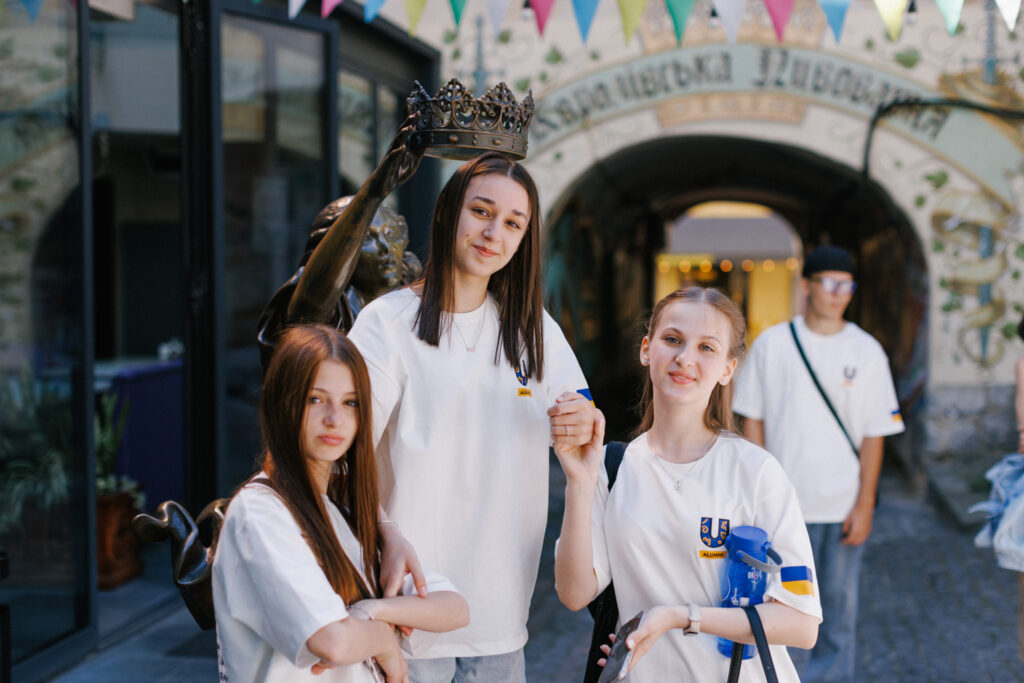
The European Wergeland Centre will continue to support teens like Taras in 2026. By the end of the winter, ten additional local community teams from the Chernihiv region will be selected to take part in the UActive programme for the 2026–2027 season. Former participants from the UActive alumni club will also have the opportunity to meet in person in Lviv.
In addition, the Centre supports the capacity building of youth workers through both face-to-face and online learning opportunities, with three courses taking place this year.
Big gatherings and in-person meetings are important, but not always possible in wartime Ukraine. UActive alumni are invited to travel to Lviv to meet others in the network. For many it is their first time outside their home region.
PHOTO: UActive
“Research shows that when teenagers have strong networks and active lives, they tend to feel a stronger sense belonging and are more likely to stay in their local communities. By taking an active role locally, young people learn about democratic values not as abstract ideas, but as an everyday life experience,” says Head of Early Childhood and School Section, Iryna Sabor.
The “Schools for Democracy” Programme is implemented by the European Wergeland Centre in cooperation with the Ministry of Education and Science of Ukraine, Center of Education Initiatives (Lviv), Step by Step Foundation Ukraine (Kyiv), SavED (Kyiv) and Step by Step Moldova (Chisinau). The programme is funded by the Nansen Support Programme for Ukraine. The Nansen Programme belongs to the Norwegian Agency for Development Cooperation (NORAD).