
New Study: How Can Museums and Schools Strengthen Education in Ukraine?
Schools and museums across Ukraine are finding new ways to work together despite the war, but security risks, geographical inequalities and a lack of institutional support continue to limit cooperation, finds a new study from The European Wergeland Centre.
Museums are increasingly becoming more than guardians of history – opening the doors and transforming into spaces for education, dialogue and community interaction.
In wartime Ukraine, this transformation has taken on particular importance. Museums are not only preserving cultural heritage, but also helping communities understand their own reality and engage with memory, trauma, local history, and democratic values.
“At a time when Ukraine continues to face the consequences of Russia’s aggression, museums play an increasingly important role not only in preserving memory but also in fostering civic responsibility, resilience, critical thinking, and democratic values. Building strong partnerships between museums and schools is therefore an investment in both cultural heritage and the future of our society,” says Maidan Museum Director, Ihor Poshvailo.
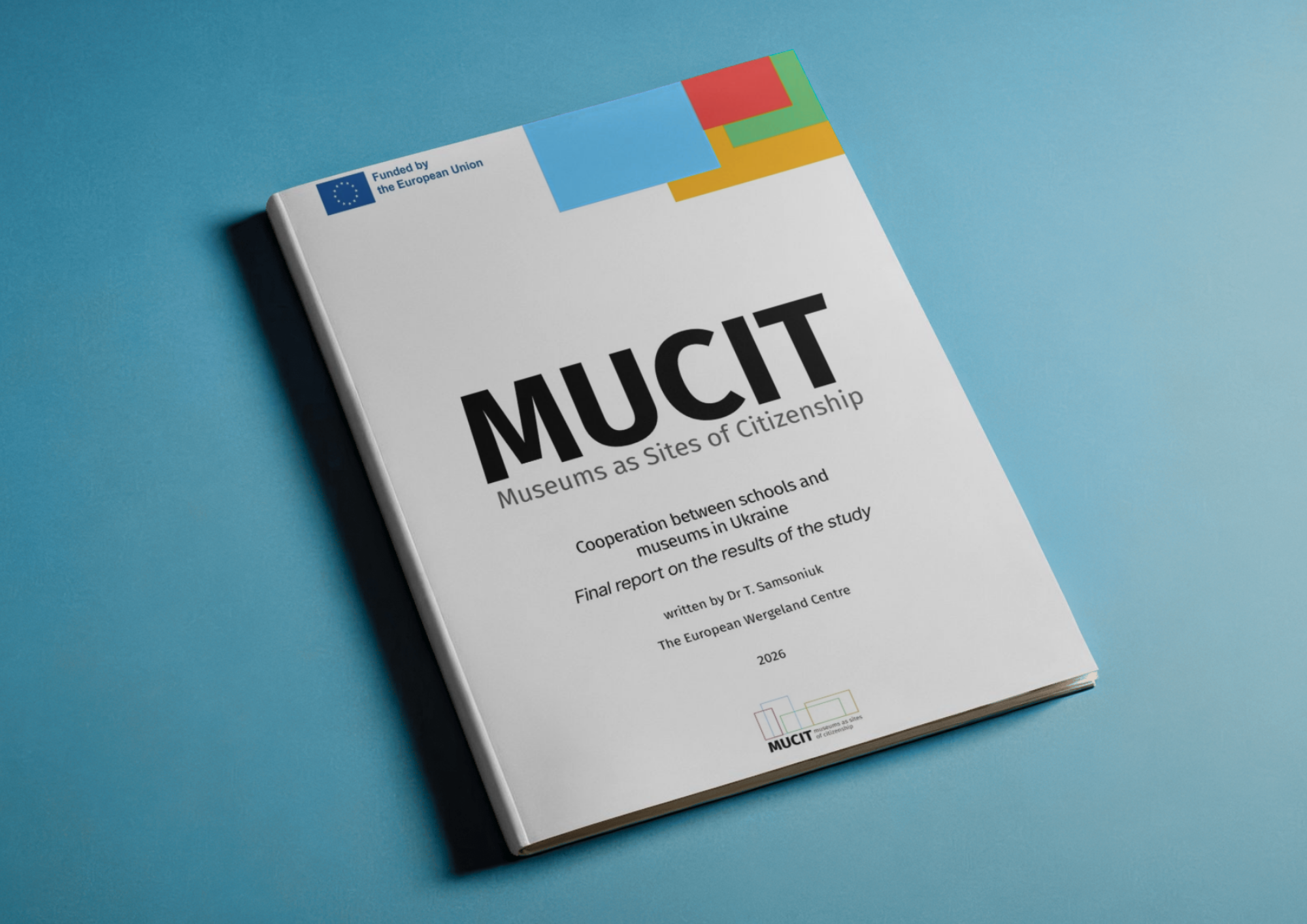
A new study, “Museums as Sites of Citizenship: Cooperation between schools and museums in Ukraine,” developed by Ukrainian historian Dr Tetiana Samsoniuk, examines the extent to which museums and schools are able to work together in wartime Ukraine – and what can be done to strengthen these partnerships.
The study is part of MUCIT: Museums as Sites of Citizenship, a collaboration between The European Wergeland Centre, Maidan Museum in Kyiv, POLIN Museum in Warsaw, and Utøya in Norway.
Based on interviews with 31 museum and 62 school representatives, the study finds a growing recognition of museums as active educational and civic partners. At the same time, cooperation remains fragmented and is often dependent on the enthusiasm of individual teachers and museum professionals, rather than stable institutional structures.
From museum visits to meaningful learning
Both the study and past experiences from the MUCIT project show that a museum visit will have the greatest educational impact when it becomes part of a wider learning process.
According to teachers interviewed for the study, 88.2% of existing museum visits take the form of traditional excursions, where students largely remain passive listeners. Research shows that stronger educational outcomes emerge when students are given opportunities to research, discuss and reflect, and to take an active role as guides or content creators.
Today the responsibility of incorporating museum visits into the curriculum and harvesting the added benefit such a visit may entail, falls squarely on individual teachers.
“Through our extensive work with schools in Ukraine, we know that teachers need help and support to overcome the challenging new realities affecting the classroom,” says Iryna Sabor, Head of Early Childhood and School Section and main initiator of the MUCIT project.
“Schools are asking for more digital resources, and for museums’ support in teaching challenging topics that are scarce on the curriculum. They would also like more participatory involvement of students, and a more trauma-informed approach in the museum.”
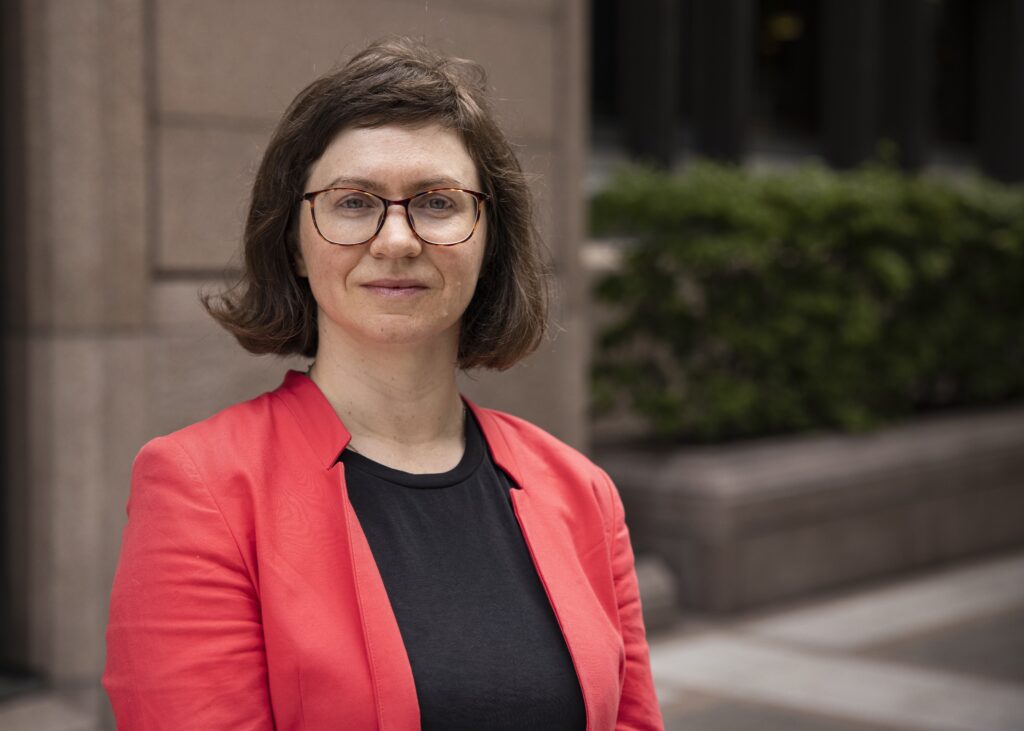
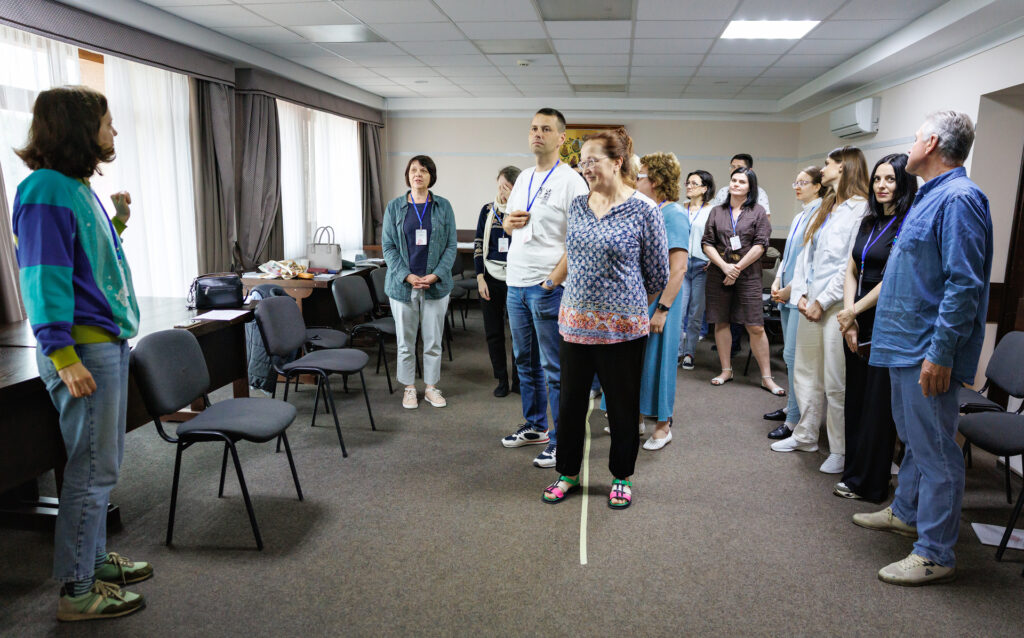
MUCIT: Museums as Sites of Citizenship is a two-year project that brings together museum educators from Ukraine, Poland and Norway to support Ukrainian museums and memorial sites by strengthening their civic education programmes and building their capacity to safeguard, promote, and showcase democracy as an element of intangible cultural heritage during the war and throughout post-war recovery.
“I believe that the essence of this project is that we have a common goal, that we want to create open museums that speak about responsibility, common values and democracy. Having different experiences, we support each other and build something that we later can teach to young citizens,” says POLIN Museum Chief Education Specialist, Monika Koszyńska, about the network of museum educators the project has established.
Monika Koszyńska heads the POLIN Museum Ambassador Programme, which works as intermediaries connecting museums and schools. Through the MUCIT project, a similar programme has been established at the Maidan Museum in Ukraine.
When access means safety
Russia’s war against Ukraine has fundamentally changed what it means for a museum to be “accessible”.
Before the full-scale invasion, accessibility was often understood in terms of cost or physical distance. Today, the availability of a shelters, procedures during air raids and a safe route to the museum can determine whether a school is able to visit at all.
This exacerbates the geographical inequalities that already existed between rural and urban Ukraine even before the war.
In relatively stable areas such as Rivne and Okhtyrka, schools and museums have been able to develop cooperation as part of a broader educational ecosystem. In frontline and border regions, including Sumy and Zaporizhzhia, shelling, online schooling and restrictions on movement severely limit opportunities for museum visits.
Digital and mobile approaches can help bridge these gaps. Some museums are bringing objects from their collections directly to schools through a “museum in a suitcase” approach, while online resources allow museums to reach children who cannot safely visit in person.
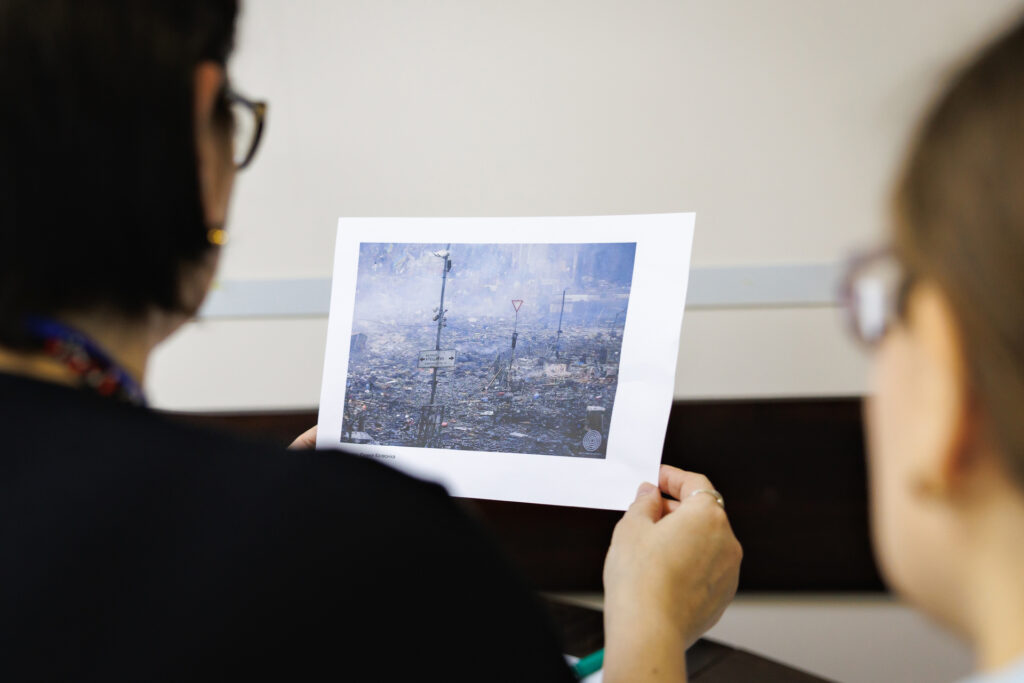
Yet the study also finds significant fatigue with online learning. Teachers and museum educators emphasise that digital experiences cannot fully replace seeing an object, moving through a museum and interacting with others in person.
Most museums surveyed in the study do not yet offer mobile exhibitions or digital learning resources linked to the school curriculum. Many lack dedicated staff for educational activities, while communication between museums and schools remains inconsistent.
In wartime, the urgent need to protect collections and museum facilities from attacks also leaves less time and capacity for developing and maintaining cooperation with schools.
Teaching history while living through it
Russia’s full-scale war has also transformed what it means to teach difficult and controversial topics.
For previous generations, subjects such as the Holodomor, the Holocaust, Soviet repression or Chernobyl could be approached with the emotional distance of time. For Ukrainian children today, war is not history. It is part of their everyday lives.
Teachers and museum educators are working with children who may have experienced occupation, displacement, the loss of their homes or the death of family members.
One museum educator recalled a girl encountering a portrait of her deceased father during a museum visit. She approached it, began stroking the portrait and started to cry.
“When it comes to trauma we would ideally have waited several years or hundreds of years, but sadly Ukraine does not have such luxury,” says Anastasiia Haidukevych-Kachuro, a researcher at the Maidan Museum. “We try to create exhibitions that do not retraumatise the audience, but rather help trigger something in them that they may process their trauma in a healthy way.”
This places new demands on both museum educators and teachers. They need greater professional support and training to approach sensitive topics in ways that are both educationally meaningful and psychologically safe.
From improvisation to sustainable cooperation
Despite thsee challenges, the study documents numerous examples of museums and schools finding creative ways forward.
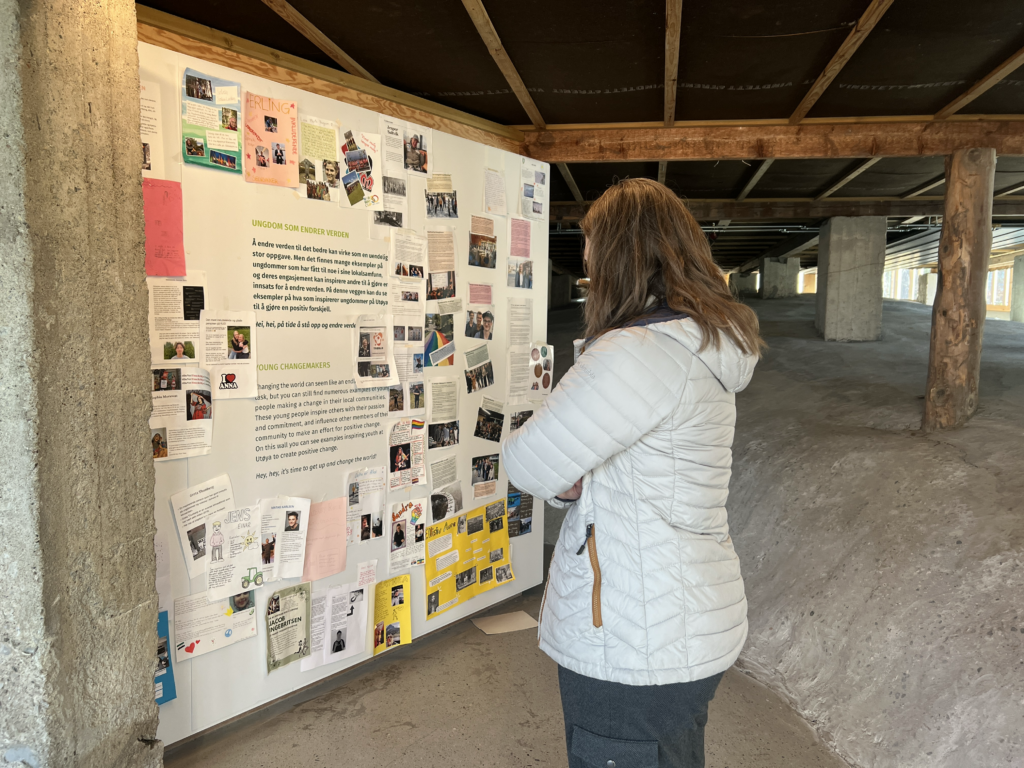
In Rivne, for example, the Regional Museum of Local Lore has run its “Museum Guide School” for several years, giving students in grades 9–10 the opportunity to contribute to museum exhibitions. Other museums combine visits with outreach programmes, online learning, teacher materials and interdisciplinary activities.
Even in wartime, museums can give young people opportunities to investigate, question, discuss and participate, while strengthening their sense of belonging and their ability to take part in democratic life.
But how to make these opportunities available to more children?
The study points to institutionalisation as a key step. Education departments, local governments and cultural authorities can help connect schools and museums, while sustainable funding, professional development of museum educators and dedicated school-museum coordinators can make cooperation more systematic.
“Unfortunately, as both this study and our own experiences show, there is a lack of professional training opportunities for museum educators,” says Iryna Sabor.
“This is a gap that we have tried to address through our MUCIT project, but a larger, systematic, government-led effort would help ensure that far larger portions of museum staff have access to the professional development they need. Dedicated university courses, alongside dedicated educational positions within museums, would significantly improve the quality of school–museum cooperation,” she says.
Better evaluation of museum education may also help demonstrate its social and educational value, making it easier for museums to secure funding, expand successful practices and become part of long-term educational policy, the study finds.
Building for the future
The challenges facing Ukrainian schools and museums are immense. Geography, security, displacement, trauma and exhaustion have created deep inequalities in children’s access to cultural and educational opportunities, while a lack of time, resources and professional development for museum staff, forces too much of the burden of cooperation to fall on individual teachers.
But the study also offers a reason for optimism.
Across Ukraine, teachers and museum professionals are already bringing the museum into classrooms, involving young people as creators and guides, and finding ways to use cultural heritage to help children understand both their history and the world they are living through.
The task now is to ensure that these efforts do not remain isolated examples of educator-driven ad-hoc solutions, but a systemic effort to improve school-museum cooperation.
With the right support, cooperation between schools and museums can become a powerful part of Ukraine’s recovery – helping a generation of children not only understand the past, but develop the knowledge, confidence and democratic skills needed to shape the country’s future.
Read the new study, “Museums as Sites of Citizenship: Cooperation between schools and museums in Ukraine,” to explore the findings and recommendations in full.