2021 marks 10 years after the terrorist attacks in Norway 22 July 2011. The attacks affected , and still affect, individuals, local communities and society as a whole.

Head of EWC Youth Section
EWC Executive Director
To mark the event, Utøya is organising a conference together with EWC at the island 19-20 July, bringing together policy makers, researchers, education professionals and institutions to discuss what can be learned from Utøya today and in the future. The conference will be an opportunity to share our experiences, considerations and lessons learned from developing our common learning program after 22 July.
Since the terrorist attacks in Norway in 2011, right-wing extremist conspiracy theories have persisted online, and to an extent, even been considered acceptable in public debate and mainstream politics. The General Secretary of the UN, António Guterres, has expressed concern that the Covid-19 crisis has been used by far-right and extremist movements to gain support for their cause; promoting conspiracy theories, mistrust and division.
Schools and teachers are in the forefront dealing with these issues, as they find their way into the classroom, through students, colleagues, parents, media and local community. Policies in several countries highlight education and schools as a primary area for prevention of extremism, as schools have a mandate to educate citizens and promote common values. However, what exactly should be the role of the school and how prevention strategies should be implemented in practice is not clear-cut. Prevention of extremism through education brings about ethical concerns, such as some policies targeting specific groups of students as more likely to become extremists, which might lead to exclusion and jeopardize the important teacher – student relation. There is also a lack of research on how education and specific education practices can prevent extremism.
In this complex landscape, EWC sees that there are important lessons to be learned both from Norway and other countries’ experiences with the educational responses to terrorist attacks, as well as the role of education to ensure democratic development. Therefore, we are pleased to announce a joint initiative between EWC and the Council of Europe to develop an international educational program with the overall aim to strengthen the democratic resilience of young people through education, particularly in countries recently affected by terrorist attacks. EWC will bring in experience and expertise from developing the national program in Norway, which aims to strengthen students and young people as democratic citizens.
Strengthening young people’s confidence in their ability to take part and their trust in shared values and democratic institutions is essential. Stand for something, not just against something. “Hey hey, time to get up and change the world”.
To learn more about the new project, visit the website here
THE CHALLENGES
Radicalisation& Extremism
Policies on preventing radicalisation and extremism through education (PVE-E) have been widely contested in recent years. Experts from research and practice have particularly pointed out the danger of pinpointing certain students as “vulnerable to radicalization”, which might lead to stigmatization, discrimination, and infringements of human rights. This approach might also compromise student– teacher relations necessary for the learning process.
Sensitivities & Controversies
Terrorism and extremism are challenging issues to address in the classroom. Especially in the immediate aftermath of a terrorist attack, the issue might be frightening for students. Moreover, terrorism and extremism are usually connected to tensions and controversy in society, which challenges teachers’ ability to balance different considerations – to students, parents, local community, school, curriculum, colleagues and their own experiences and viewpoints.


Limited Research on Teaching Practices
There is limited research on teaching practices in school in the aftermath of terrorist attacks. A small study conducted in Norway in 2015 on teaching about 22 July in the school subject Religion and Ethics found that teachers often hesitate to teach about the terrorist attacks. However, our experiences from the learning program at Utøya, tells us that many teachers do teach about 22 July. More research is needed to understand teacher’s practices and needs, also on the international level.
Disagreement in the classroom
Addressing issues connected to tolerance, inclusion and diversity in the classroom could spark loud debates. It is a challenge to make sure that all students experience in practice the principles of a democratic culture, such as respect, fairness and equality. There might also be a challenge to respond to conflicting truth-claims among students connected to a specific issue.

RESULT STORIES
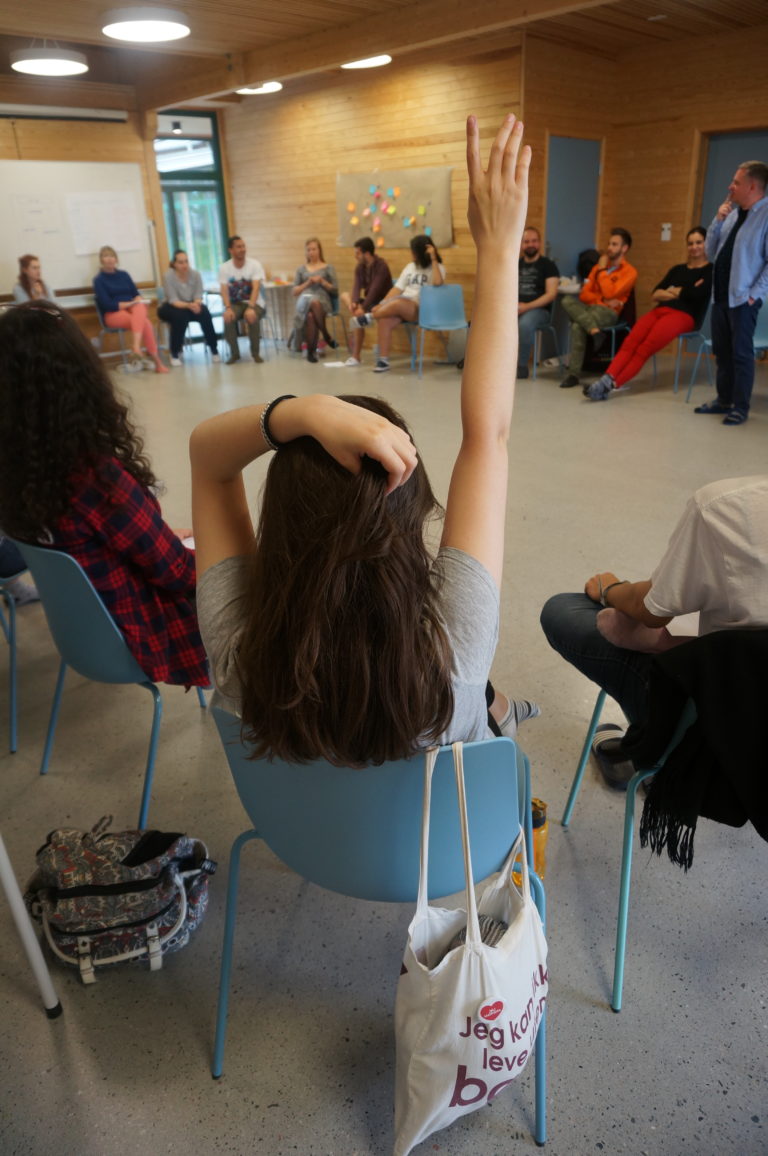
Students and teachers share their experiences after spending three days at the Democracy Workshop at Utøya. Hear about what they learned and what they think about the program.