
Why Are We Called Wergeland?
“Wergeland? Is that somewhere in Norway?”
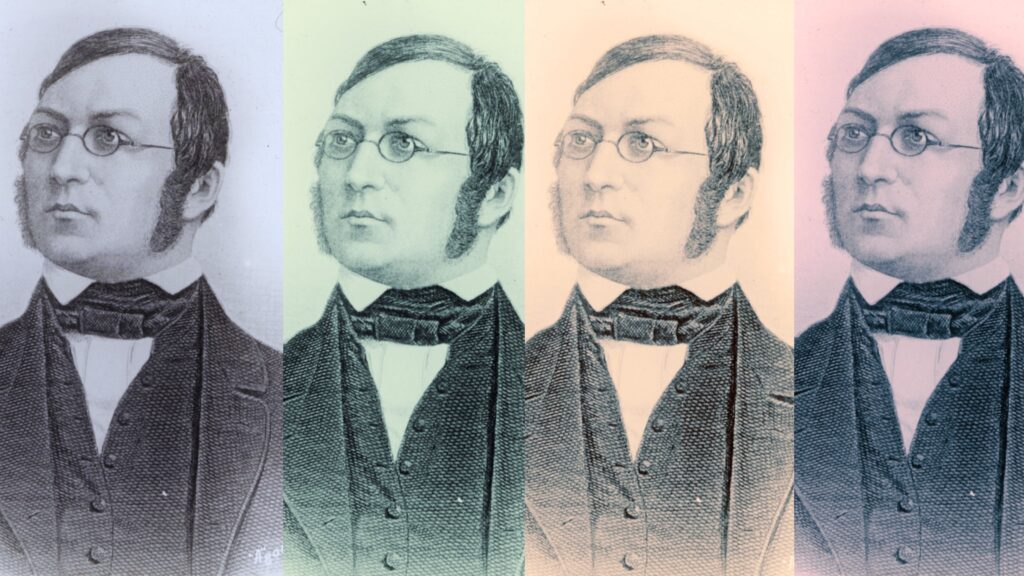
By Veslemøy Maria Svartdal
It’s a question we hear often. Partners, course participants and friends of the European Wergeland Centre are sometimes puzzled by our name. Who or what does that giant W stand for in our logo?
The answer can be found in Norwegian history.
The Story Behind Our Name
In the early 2000s, the Council of Europe concluded that its member states needed an international resource centre that could bridge policy, research and practice in education for democratic citizenship, human rights and intercultural understanding.
Norway offered to finance its establishment, and in 2008 the European Wergeland Centre opened in Oslo, where it remains today.
But what should such a new centre be called?
The answer was clear. If the Centre was dedicated to education for democracy and human rights, it should bear the name of someone who had devoted his life to those same ideals.
That person was poet, public educator and humanist Henrik Wergeland (1808–1845).
Who was Wergeland?
A child of the European Enlightenment, Henrik Wergeland grew up at a pivotal moment in Norwegian history. When he was just six years old, 112 representatives gathered at the small hamlet of Eidsvoll to draft Norway’s first constitution. Among them was his father, the theologian Nicolai Wergeland.
Although Norway would not achieve full independence until 1905, the Constitution of 1814 inspired a new national confidence and transformed the country’s political and cultural life.
Few embraced the Constitution more passionately than Henrik Wergeland.
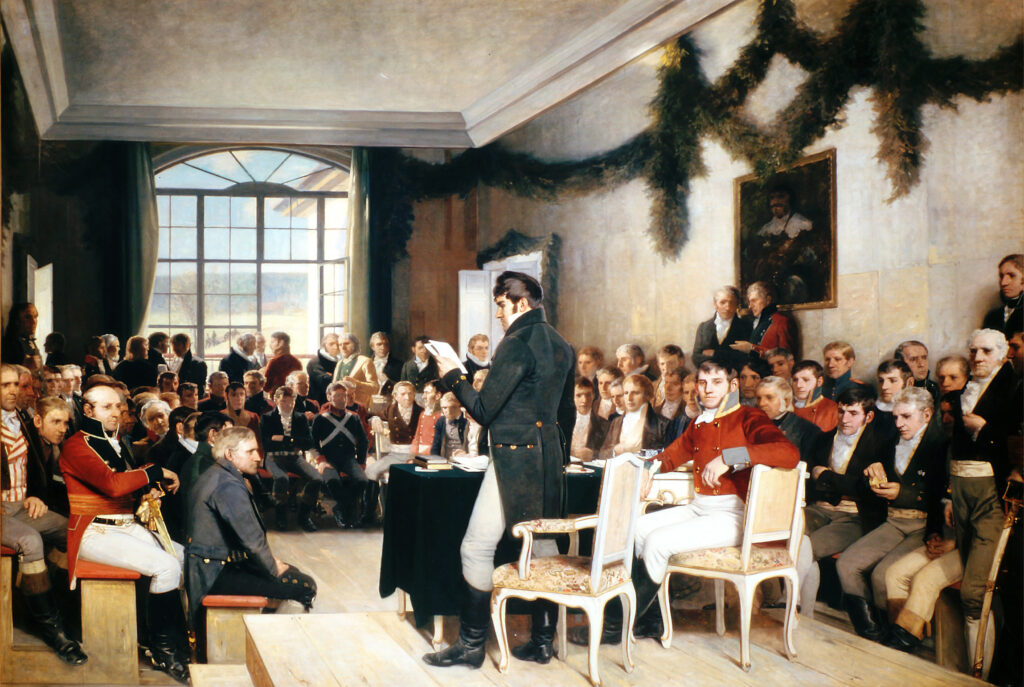
He famously called himself the Constitution’s “six-year older brother.” To him, it represented not simply a legal document, but a promise: that Norway would become an open and tolerant society where education overcame ignorance, where freedom of expression and belief were protected, and where every person could live with dignity.
You shall drive your plough with pride; you shall walk behind it as an enlightened, free man, not as an empty-headed slave of darkness who knows nothing more than how to scatter oats in a furrow and then harrow them. (…) You shall learn to prove for yourself what the pastor preaches from the pulpit, judge for yourself what the judge rules from his seat!
Henrik Wergeland
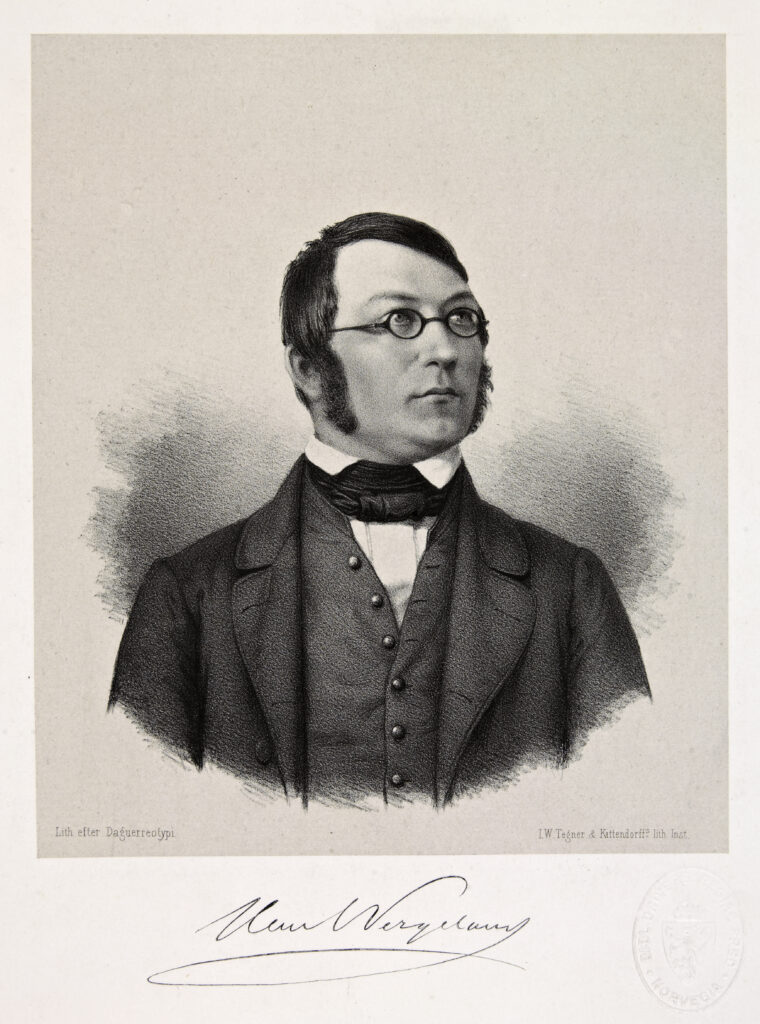
At Wergeland’s time, Norway was a hierarchical, rural society of farmers and a small landowning elite. Aside from a few wealthy landowners, Henrik’s own little hamlet was populated with tenant farmers, servants, and casual labourers. Education was limited, though literacy was fairly high due to the teachings of the Lutheran Church.
Despite a national constitution progressive for its time, political rights were limited – only about 5–10% of the male population could vote.
Wergeland wanted far more for his country, and for the rest of the world.
He was convinced that with its own constitution, Norway had gained a unique opportunity to build a free democracy founded on humane values, and that Norway’s struggle was closely connected to similar fights for freedom and indepedence around the world.
But if the heart is full of compassion, the head must be filled with the thought of aid… My feeling is too warm to die away in a sigh, to be strangled by doubt. I owe it an attempt. There is triumph in following your conviction. In obeying your conciousness.
Henrik Wergeland
More than a Poet
Henrik Wergeland’s main vocation was that of a poet. At his time, the poet had a unique position in society, as a moral compass, a truth-teller and a carrier of the national idea.
Much of Wergeland’s poetry bears the marks of its time. Educated in the classical tradition of the European upper classes, he wrote in a passionate and ornate style, rich in allegory and sprinkled with constant references to ancient Greek deities and Roman history.
The intricate language has made his work difficult to understand for a modern audience, and almost impossible to translate – rendering his name unknown for most people outside of Norway.
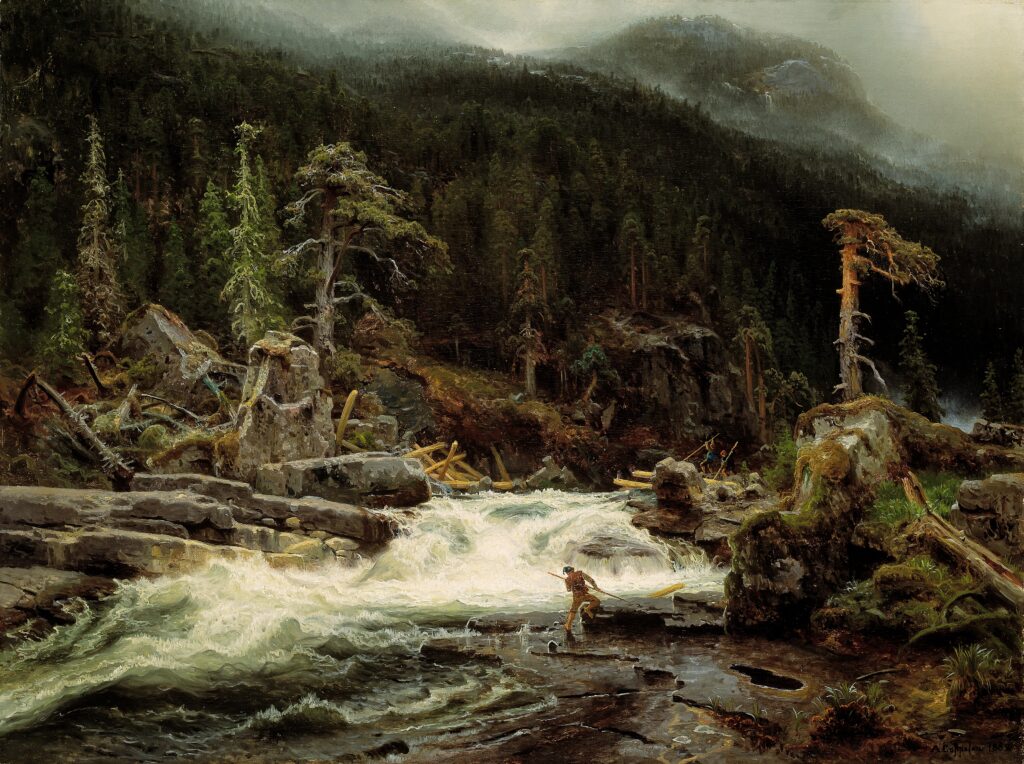
However, he didn’t limit himself to poetry. Wergeland was relentless when it came to share his message, and zealously dipped his pen into the inkwell to write up educational pamphlets, children’s schoolbooks, songs, satirical verses, public speeches and essays — anything that could help spread knowledge and encourage active citizenship. He founded libraries, edited newspapers, advocated for the poor and worked tirelessly to make education available to more people.
Give, heap the work on me!
Henrik Wergeland
He believed ordinary people should think critically for themselves rather than simply accept authority.
Wergeland’s advocacy for tolerance and equality, however, challenged many of the prevailing attitudes of nineteenth-century Norway. In a hierarchical society dominated by conservative political elites, he was frequently dismissed as a dreamer, a radical and an inconvenient critic.
The Constitution’s Fiercest Defender — and Critic
While Henrik Wergeland carried a profound love for the Norwegian Constutition and celebrated it’s signing date of May 17th exuberantly every year, that did not prevent him from criticising its shortcomings.
Paragraph two in the document denied Jews and Jesuits entry into Norway. Wergeland regarded this as a profound contradiction of the Constitution’s ideals and devoted years of his life to campaigning for its repeal, appealing to the good nature of Norwegian parliament members through his emotional style of poetry and prose.
He did however not live to see his victory.
In 1845, penniless, beleaguered by legal troubles due to his sharp tongue and even sharper feather pen, as well as gravely ill to a sickness of the lungs, Wergeland spent his last months conjuring poems and penning his memoirs before dying – only 37 years old.
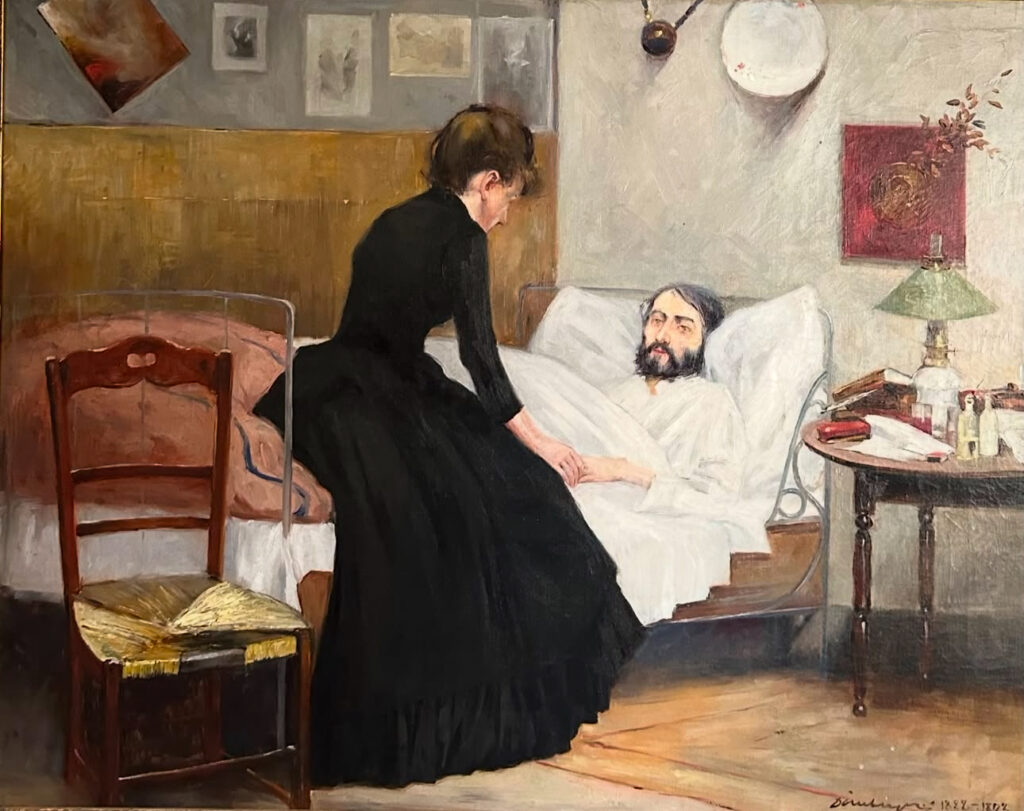
His tombstone was paid for by Swedish Jews with a plaque expressing their gratitude for his support and advocacy, and his funeral was attended by thousands of Norwegian citizens. However, only one member of Parliament showed up to pay his respects.
In the years that followed, memories of the sharp-tongued polemicist, so often at odds with the political and cultural establishment of his day, gradually faded. Instead, Henrik Wergeland came to be celebrated as a great poet, a pioneering humanist, and one of the defining figures in the Norway’s cultural heritage and journey towards independence.
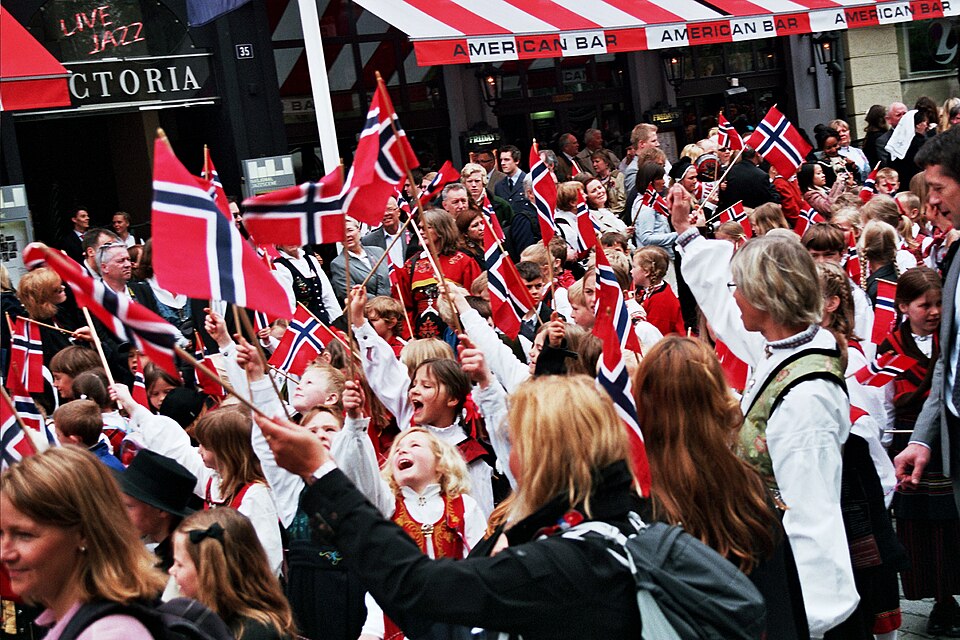
Six years after his death, paragraph two of the Constitution was finally repealed.
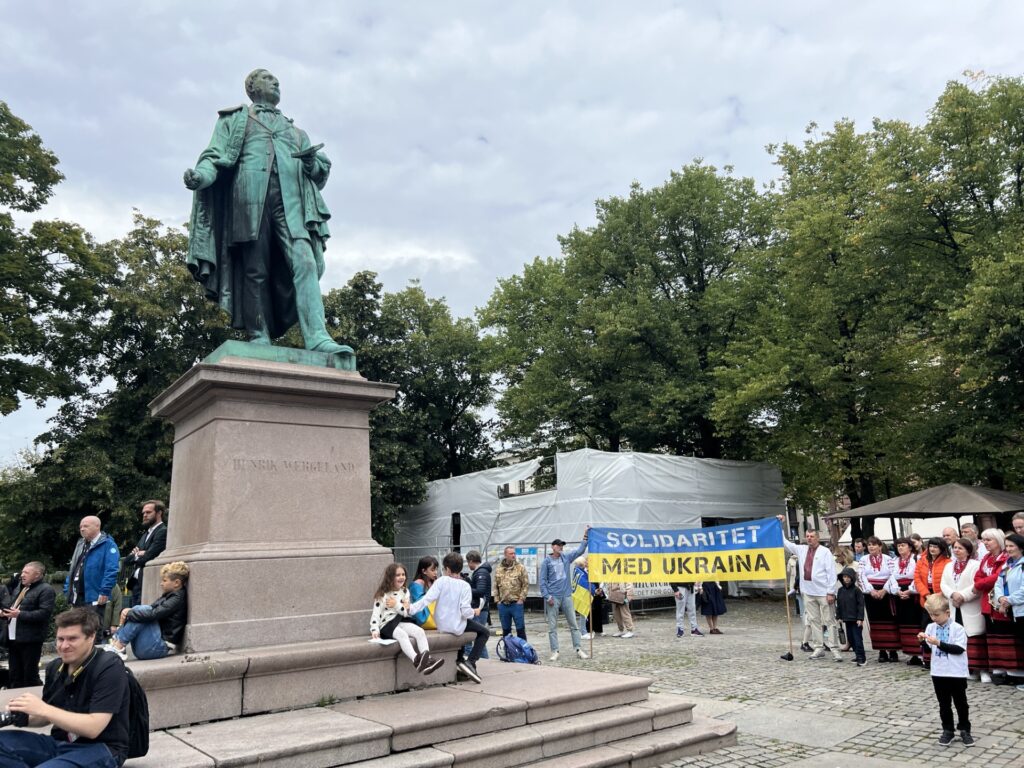
Today, Henrik Wergeland statue stands in central Oslo—only a short walk from the European Wergeland Centre.
Why Wergeland?
Driven by a deep belief in human potential, Henrik Wergeland saw the urge to learn and serve others as the soul’s highest calling. His life and writing became a passionate fight against injustice. Today he is remembered as both a patriot and a cosmopolitan, a romantic poet, a public educator and fiery advocate for freedom of expression, religious tolerance and equal human worth.
Those are the ideals that continue to guide the European Wergeland Centre.
By carrying his name, we honour not only one remarkable individual but also the enduring belief that education is the strongest foundation for democracy, human rights and peaceful societies.