Why Libraries Matter More Than Ever to Democracy
by Veslemøy Maria Svartdal
As public life increasingly moves online and access to cultural activities becomes increasingly restricted by high prices and subscription models, one place continues to buck the trend: the local library. For the European Wergeland Centre it is a valued partner and a cornerstone of democracy.
“What’s wrong with the telly, for heaven’s sake? We’ve got a lovely telly with a twelve-inch screen and now you come asking for a book!”
So shouts Roald Dahl’s bullish Harry Wormwood at his neglected daughter Matilda, who escapes her dreary childhood by disappearing into the shelves of her local library.
Sometimes the library can feel like an anomaly. When Roald Dahl wrote “Matilda” in 1988, the internet was only in its infancy. Gaming consols had yet to hit the market and smartphones belonged only in science fiction novels. Today, books don’t only have to compete with the Wormwood family’s modestly sized TV set, but a myriad of other things that steal time and focus from children and adult alike.
Yet modern libraries are no longer the dusty, silent reading rooms staffed with stern, shushing librarians we know from the stereotype. Over the past decades, the public library has evolved into an open, dynamic space for knowledge sharing, creativity, and community connection.
“The library of today is a place for much more than “just” books. At Sølvberget, you can participate in debates and courses, record podcasts, print documents, mend clothes, use the 3D printer, sing, read together – or just relax. The library is a meeting spot for people of all ages,” says Marianne Wulfsberg Hovdan, project manager at Sølvberget library and cultural centre in Stavanger.
Joining Forces for Freedom of Expression
Since 2024, Sølvberget and the European Wergeland Centre have collaborated on various projects. It all started when Marianne reached out to the Centre’s Youth Section for support on an exhibition celebrating Stavanger as a refuge city for authors, journalists and artists under threat from their governments.
Sølvberget founded the International Cities of Refuge Network (ICORN) in 2006. Today, the network includes 46 partner cities across Europe, the United States, and Latin America – with 17 located in Norway alone.
Marianne was curating Uncensured, an exhibition showcasing artists who had found safety through ICORN. She asked the Wergeland Centre to create learning materials for students visiting the exhibition.
“The goal was for visitors to gain knowledge about the persecuted artists, and in what ways freedom of speech is threatened. What consequences to people in various countries face for expressing themselves? Sølvberget also wanted promote youth engagement and for teens to express themselves,” Ida Berge, Advisor at the European Wergeland Centre recalls.
Ida has been delighted by the strong response: schools across the region have brought students to the exhibition in large numbers, since the exhibition’s opening in 2025.
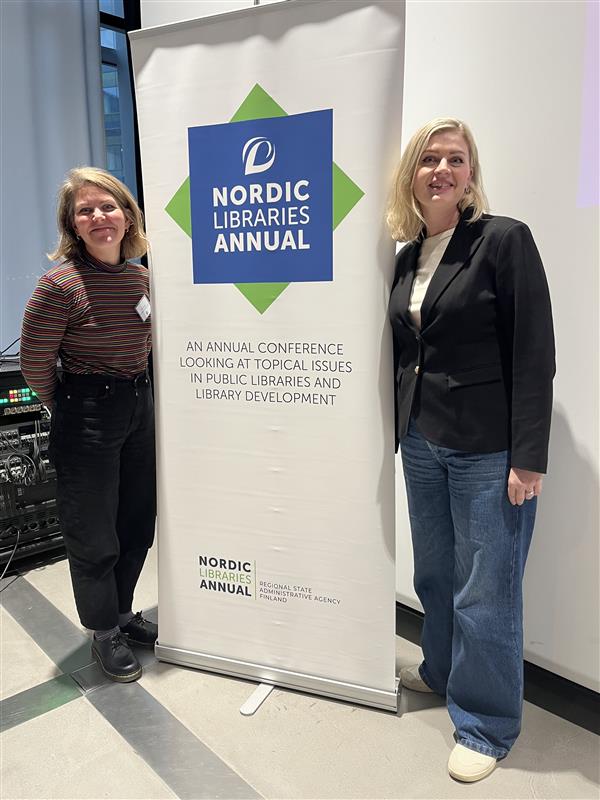
PHOTO: Ida Berge (left) and Marianne Wulfsberg Hovdan attending the Nordic Libraries Annual i Helsinki in October 2025, which gathers librarians from the Nordic and Baltic countries. This years’ topic was how librarians can work against polarisation in society.
“The library of today is a place for much more than “just” books,” says Marianne at Sølvberget. Today it has become a natural meeting place for debate and knowledge-sharing.
Libraries as Democratic Meeting Places
Since then, Sølvberget and the Wergeland Centre has found other ways of cooperating. Together with the 22 July Center, the Wergeland Centre arranges regional teacher courses in public libraries, offering guidance on how to teach about the 2011 terrorist attacks in Norway and how to place them in the broader context of radicalisation, extremism, and active democratic citizenship.
“We had already run these courses at the public library in Tromsø with great success,” Ida says. “So it felt natural to bring the model to Stavanger.”
Every school semester, the Wergeland Centre arranges regional teacher and student teacher courses in the Western and Northern parts of Norway. These are shorter versions of the three-day courses held in Oslo and Utøya.
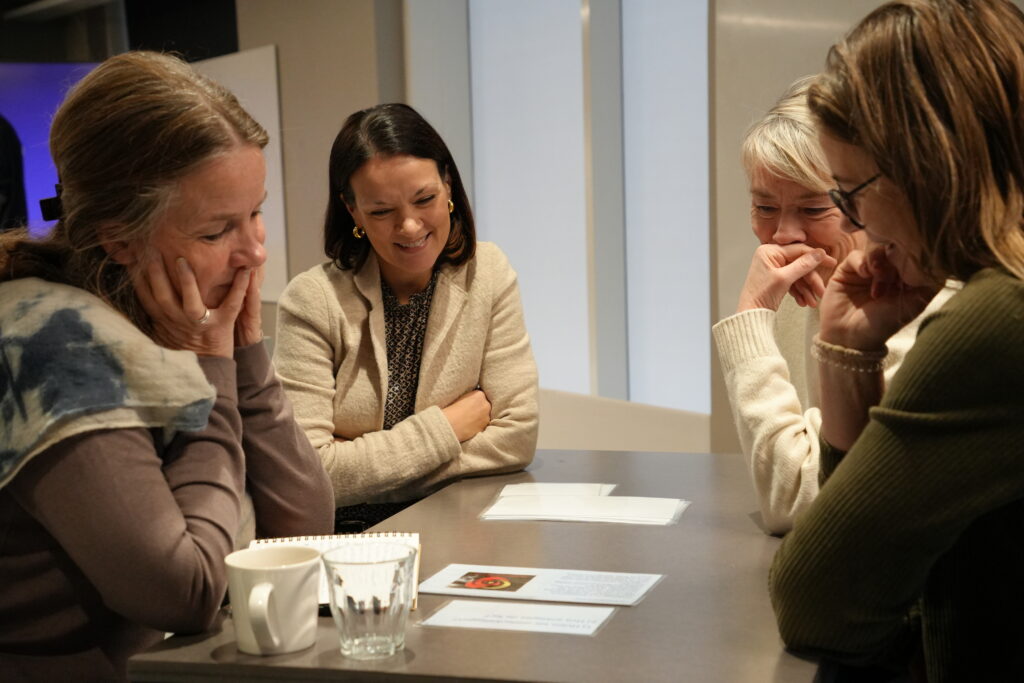
For Ida, libraries offer something increasingly rare in the digital age: a physical space where people meet face to face.
“Before the great digitalisation of society, you would meet a ton of people in a day. In the bank, at the post office etc. Now, many of these functions have been digitised, which means that chance encounters with people – even if only over a counter – are disappearing. When we talk about building democracy and counteracting polarisation, inclusion and physical meeting places are extremely important,” she says.
Marianne agrees:
“The library has a very central role in strengthening our democratic values,” she says. “We awaked curiosity, stimulate the search for knowledge and provide equal access to information and culture. We work against alienation and make it easier for people to partake in public debate.”
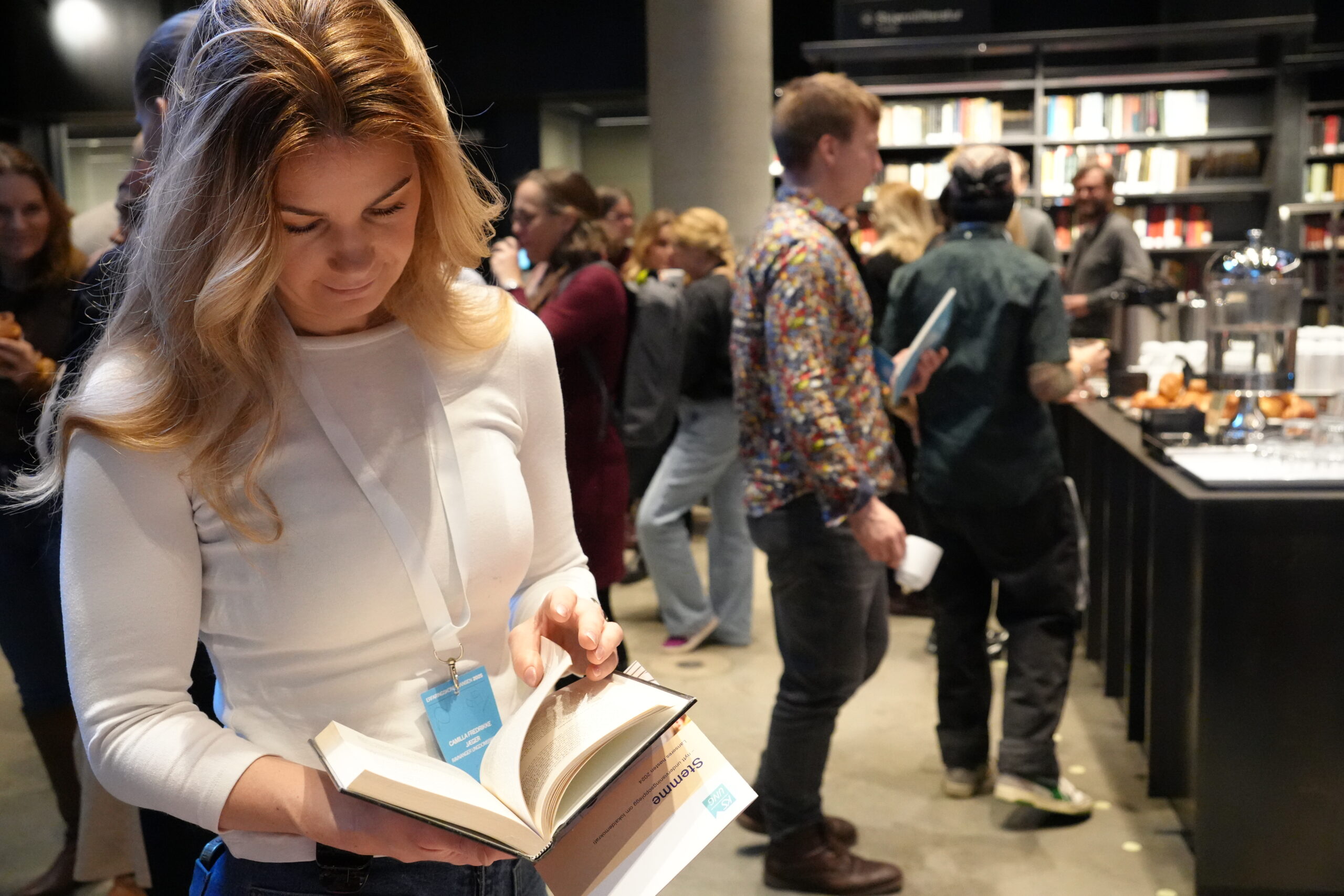
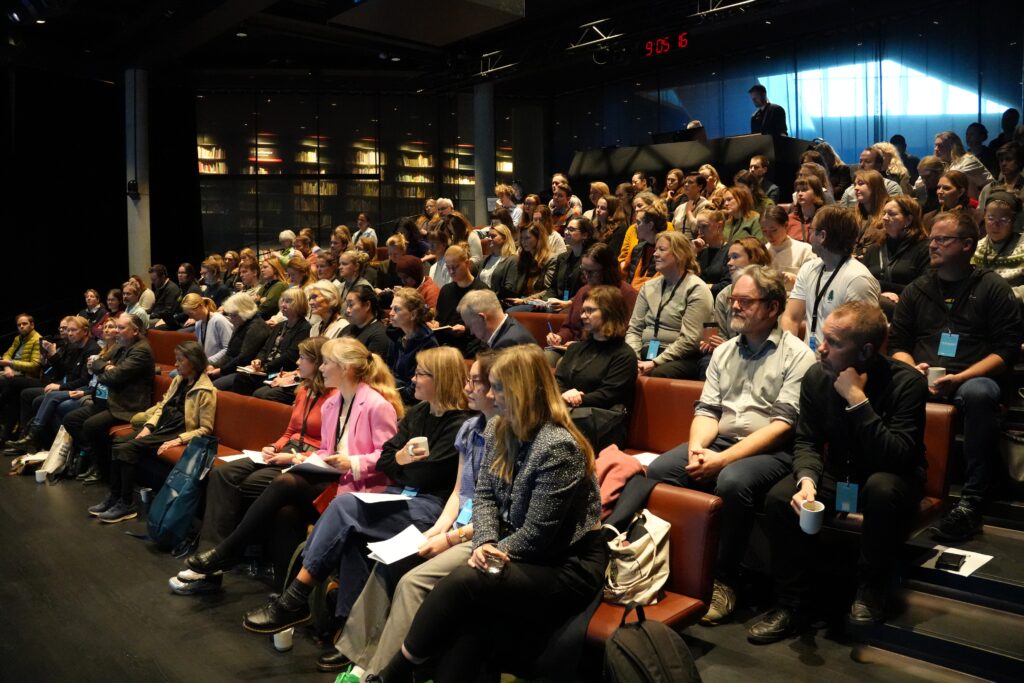
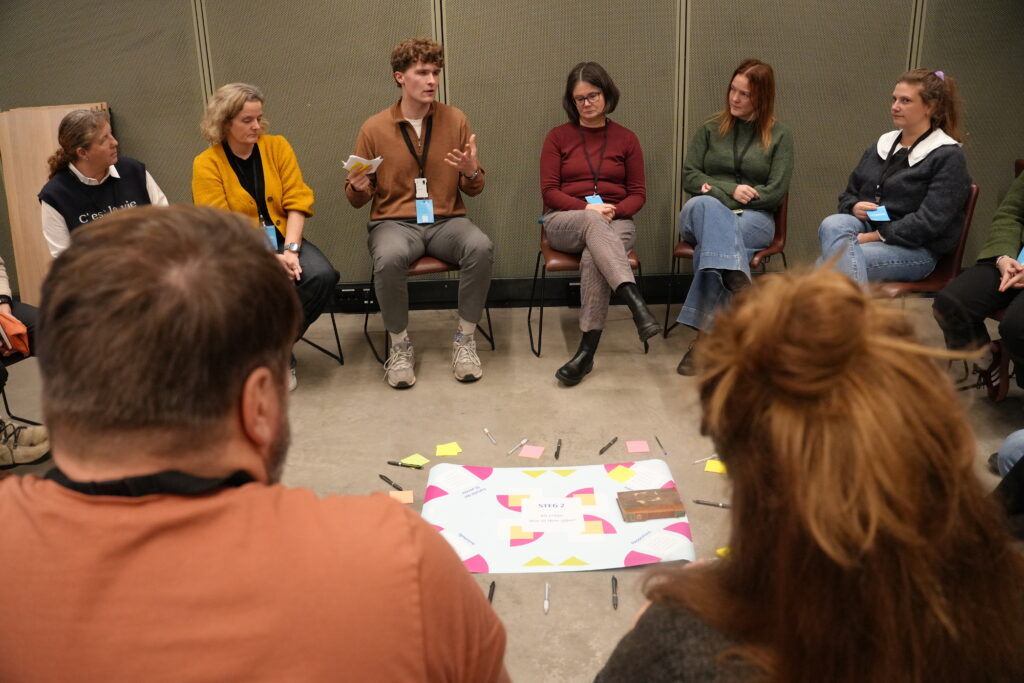
PHOTO: In November, the European Wergeland Centre and UiO:Demokrati gathered teachers, researchers, and other education professionals for its annual Experience Conference (Erfaringskonferansen) at Oslo’s main library, Deichman Bjørvika.
Navigating the Modern Era through Books
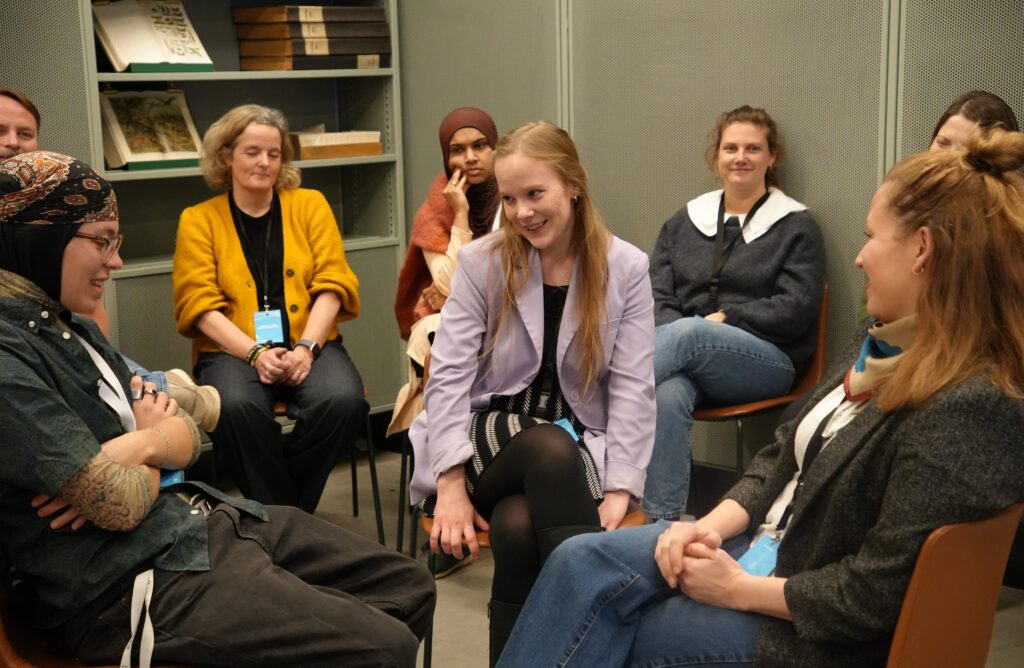
“The library is a place where you can meet others from the local community. Even brief conversations can foster empathy, curiosity about one another, and a sense of belonging,” says Senior Advisor at the Wergeland Centre, Valentina Papeikiene.
Both Valentina and Ida have recently been invited to speak at library conferences in Norway and abroad. After a lecture on how librarians can strengthen digital citizenship, Valentina was left very impressed by the commitment of the librarians she met:
“They know the local community and see the challenges more clearly than anyone else. They help as best they can, and this gives many people a strong feeling of being seen and cared for.”
Valentina believes that, in a fast-changing society, the value of books, which preserve the entire picture of human history – both the decline of democracy and its rebuilding – must be defended.
“Libraries invite us to become familiar with these stories, but they also go one step further: through events with authors, community organisations, young people and cultural life, they take up these themes and link them to what is happening here and now – with us as human beings, our society and our political expressions,” she says.
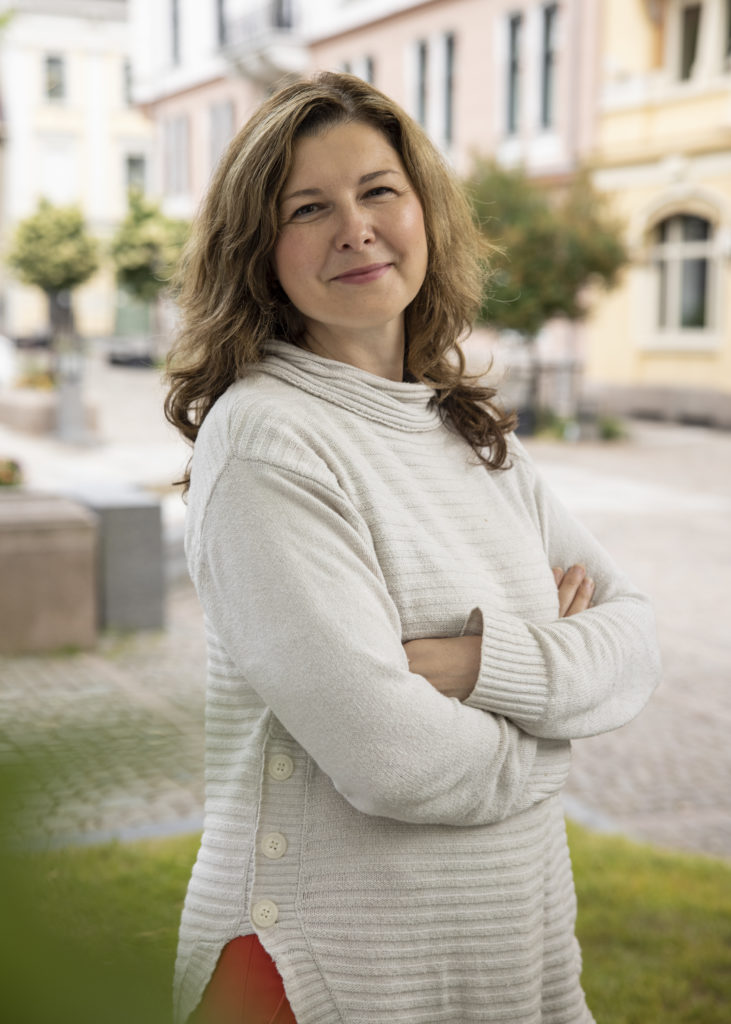
Both Ida and Valentina believes there is a natural link between the mandates of libraries and the Wergeland Centre.
A Decline in Reading — and a Risk for Democracy
Recent studies show a worrying decline in the reading performance of children across Europe, being part of a worldwide trend which accelerated during COVID lockdowns.
While many children say they enjoy reading, few read books for pleasure regularly. Children with plenty of books at home significantly outperform peers who grow up without a strong reading environment. Gender gaps also persist, with girls performing better at understanding literary texts compared to boys.
According to the latest PIRLS report, Norwegian children score much lower in reading ability compared with the results from 2016. Among the 44 countries surveyed, children in Norway report the lowest level of reading enjoyment.
“When children read less, it may affect both their ability to process information and to express their own opinions in a precise and nuanced way,” says Marianne. “It may become more difficult for them to separate fact from disinformation, which in turn leave them vulnerable for propaganda, algorithms and damaging influences. This may be a threat to democracy.”
For her, the library has a crucial role in reversing this trend, through school partnerships and a visible presence in the community.
Reaching Those Who Never Come through the Door
“At the library conference I attended with Marianne, one topic kept coming up: how do we reach the people who never visit a library?” says Ida. “How do we get people out of their caves — and out of the comment sections?”
She says it was very interesting to learn more about how libraries work and what dilemmas they are grappling with, and hope for an even larger cooperation in the years to come.
“It makes perfect sense for us to work together with libraires,” she smiles. “I believe that with our expertise, we can contribute in many ways to strengthen library activities. Exploring more avenues for cooperation will be a goal for the Wergeland Centre for 2026.”
Teacher courses on how to teach about the 22 July terrorist attack, and the yearly Erfaringskonferansen (the Experience Conference) is funded by the Norwegian Ministry of Education and Research.