King Haakon Joins the Wergeland Centre on a Day of Democracy Education
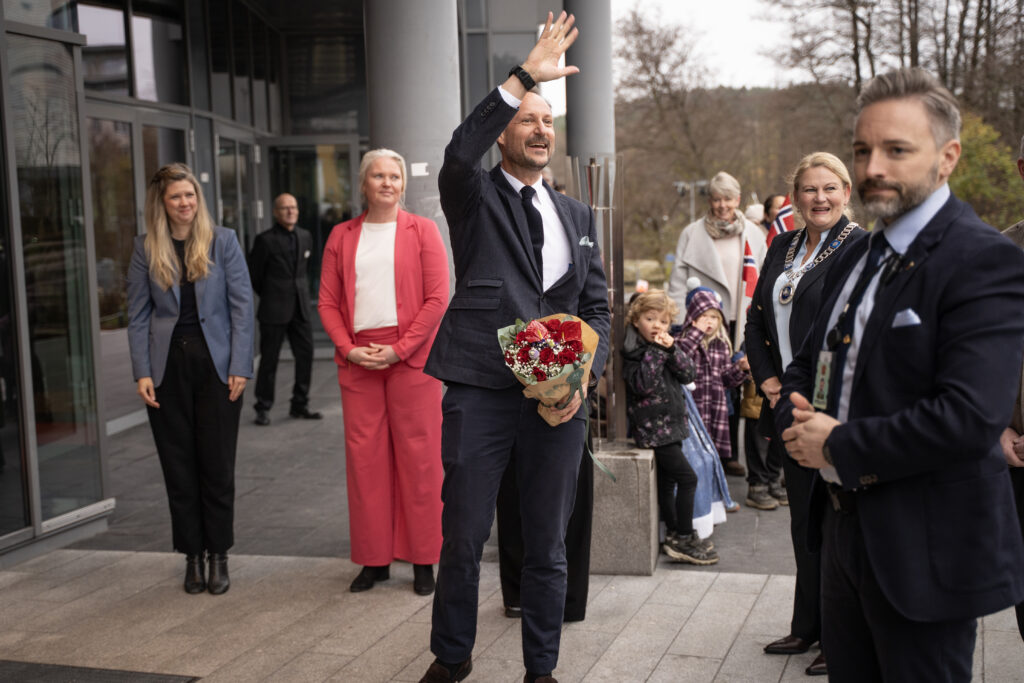
On 11 November 2026, His Majesty King Haakon of Norway joined The European Wergeland Centre to learn how young people are taught democractic competences. Through meetings with youth, teachers and experts, the King explored how schools can help children become active participants in democracy – both in the classroom and in their communities.
The visit was initiated by King Haakon himself, who expressed an interest in learning more about how democracy is taught in schools and how young people understand their role as citizens.
“We are delighted that the King has taken such a personal interest in this important topic and wanted to spend a full day exploring how we work with democracy education,” says Kristin Flacké, Acting Head of the Youth Department at the European Wergeland Centre.
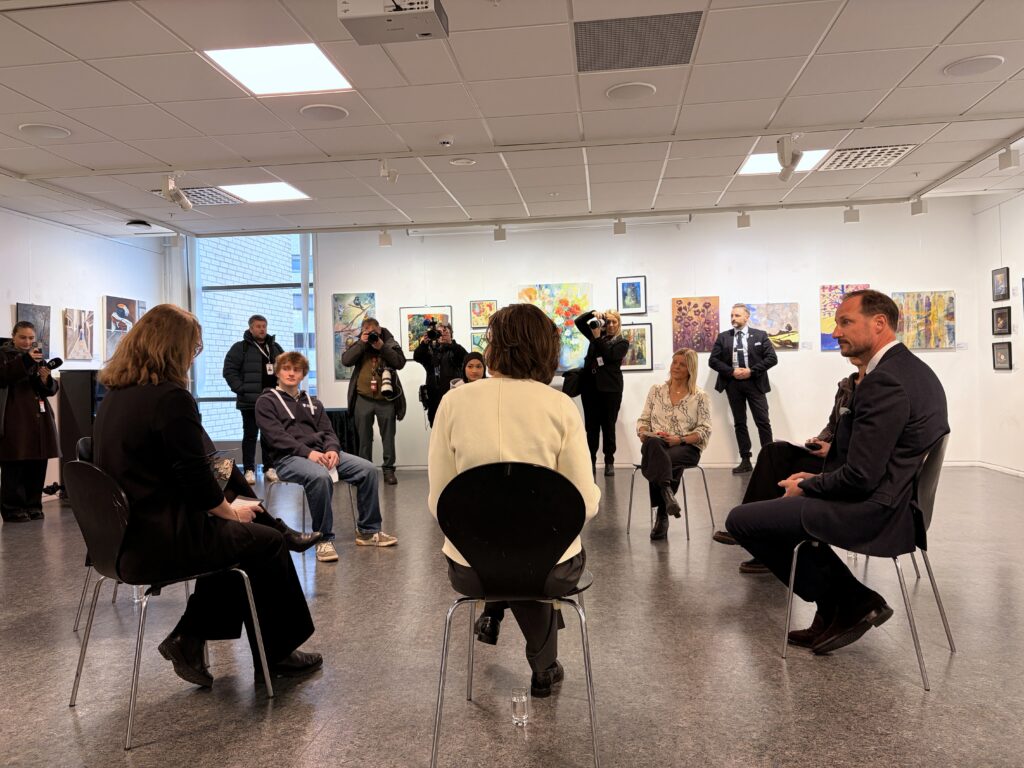
The day began at Kolben Library in Nordre Follo, where the King met with representatives from local government, young people and academic experts. Inside the library’s gallery, King Haakon joined a conversation focused on the importance of democratic spaces, young people’s confidence in their ability to influence society, and how to nurture active citizenship.
Young representatives from local youth councils shared their experiences of getting involved in local democracy. They spoke about how they had discovered the value of having a voice in decisions that affect their lives, and stressed that meaningful participation depends on adults listening to young people and taking their views seriously.
The discussions also highlighted the importance of combining knowledge about democracy with practical experience.
“Knowing how democracy works is not enough. Young people also need opportunities to practise it,” explained Kristin Flacké, presenting the Centre’s work in Norway and abroad, including its Democracy Workshops at Utøya and the Schools for Democracy programme in Ukraine.
Academic contributions from researchers at OsloMet and MF Norwegian School of Theology, Religion and Society further explored the relationship between democratic knowledge, political confidence and participation.
They also emphasised that democracy depends not only on institutions and laws, but on the people who sustain it.
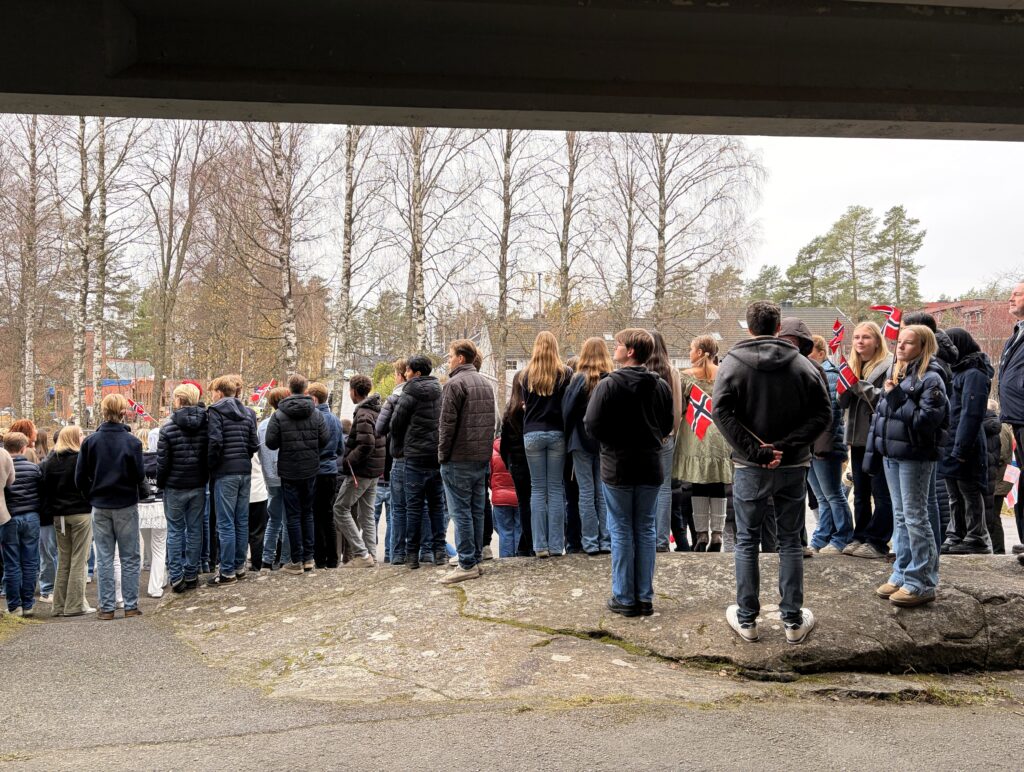
The programme continued at Fløysbonn Lower Secondary School, where the King met students and teachers involved in the Wergeland Centre’s Democracy Workshop programme.
Through workshops at Utøya, organised by The European Wergeland Centre in cooperation with the 22 July Foundation, Utøya and the Rafto Foundation, students across Norway get the chance to learn about the consequences of hatred and extremism, practise recognising anti-democratic attitudes, responding to hate speech, standing up for others and engaging constructively with disagreement.
Students who take part are encouraged to share what they have learned with their classmates, becoming democracy ambassadors in their own schools. And that is exactly what students, Amelia Eriksson Skjæveland og Idun Sandvik-Kleppestø, did when they returned to Fløysbonn after partaking in the Democracy worshop in May 2026.
Little did they know that a few months later they would lead King Haakon through one of the exercices they had learned.
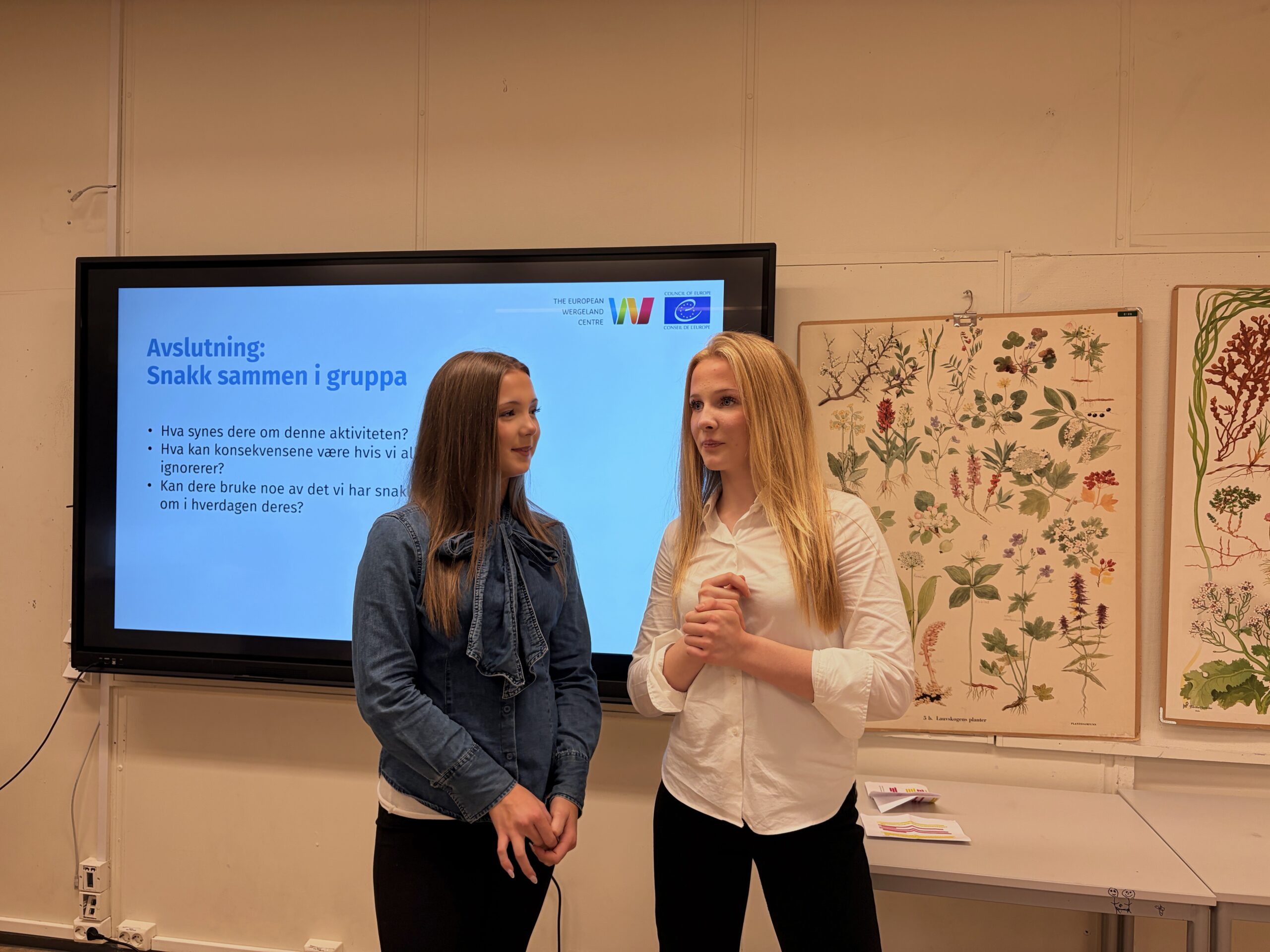
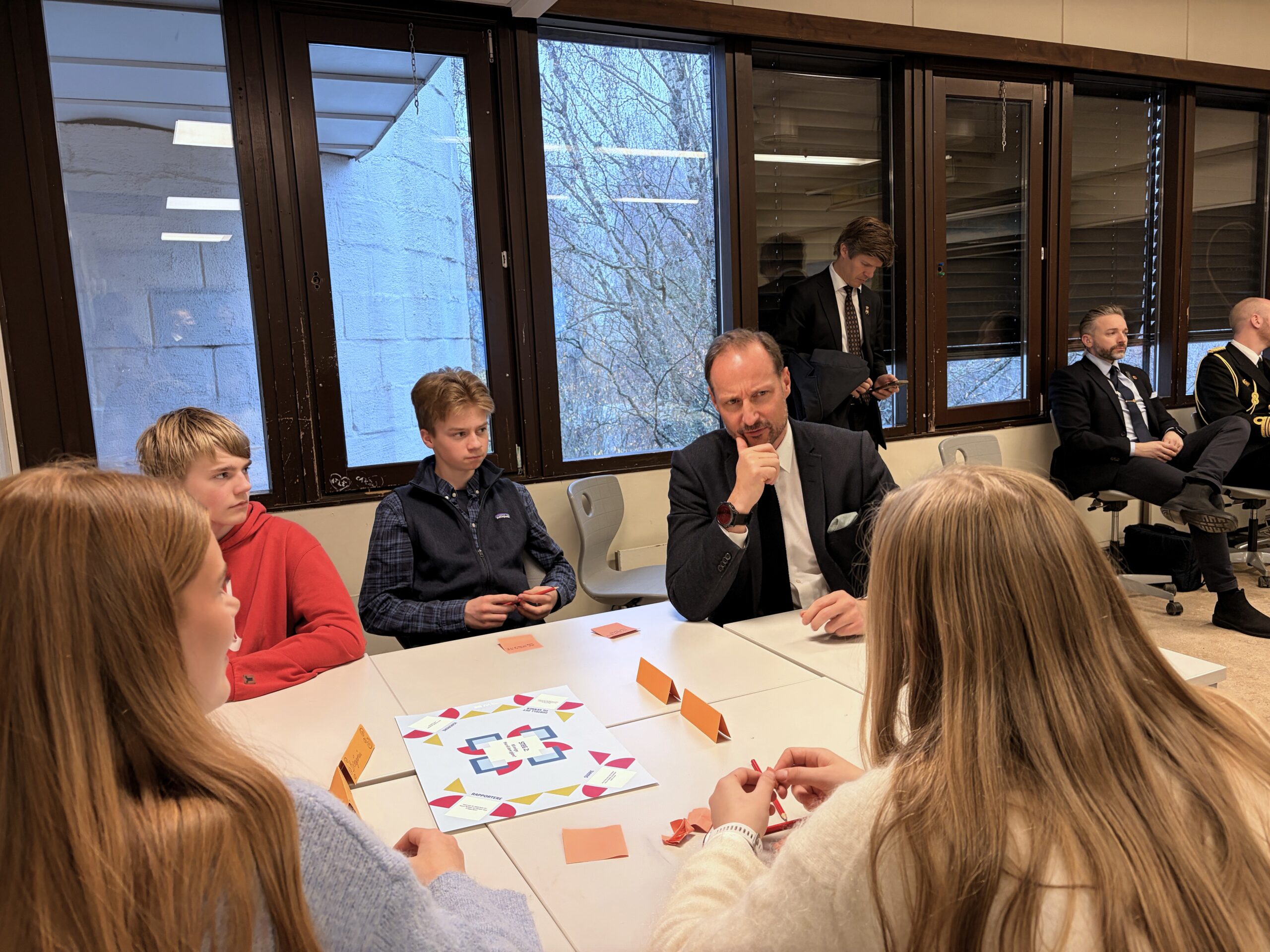
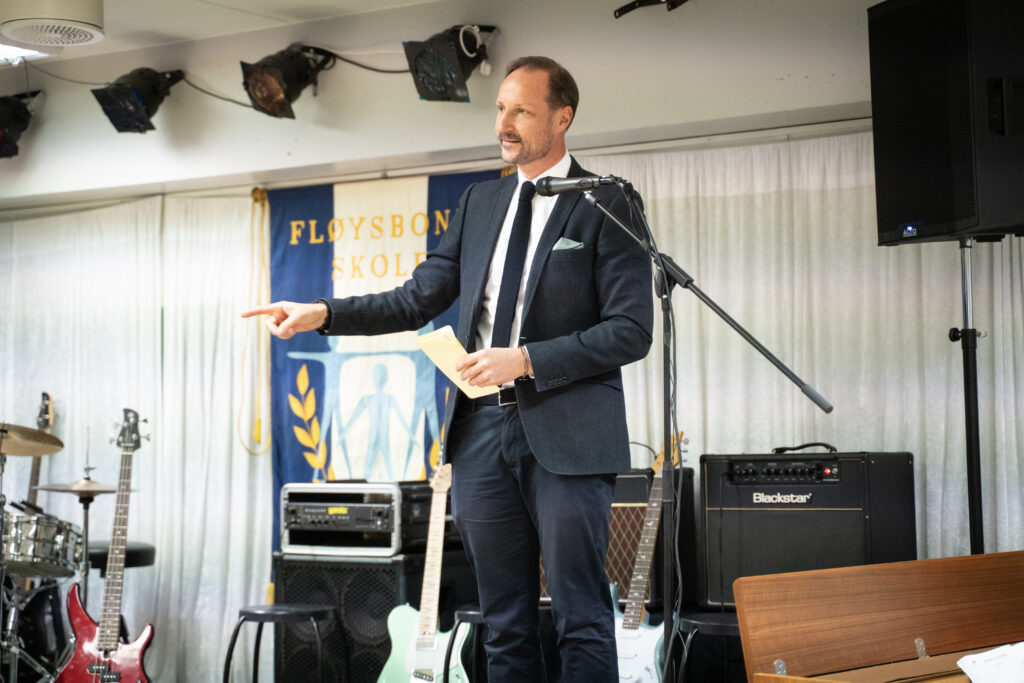
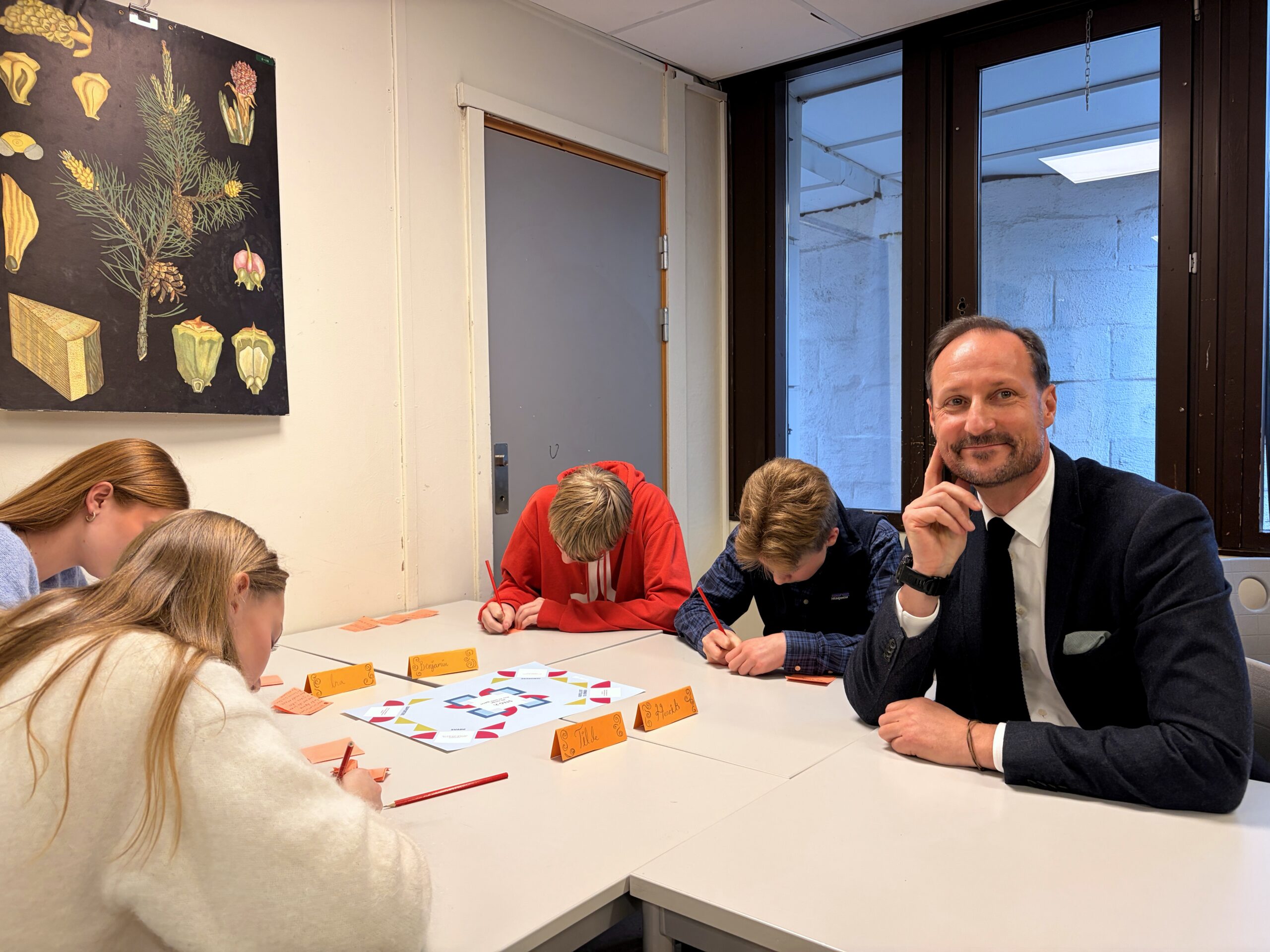
After an all-school assembly where the King talked about the importance of democracy, youth engagement and young leadership, democracy ambassadors Amelia and Idun took centre stage, leading both King Haakon and their classmates through the exercise “How to respond to hate speech”.
Read King Haakon’s speech in full here (IN NORWEGIAN)
A staple feature at Democracy Workshops, this exercise presents realistic scenarios of hate speech in everyday life, and invite participants to discuss how they would respond – speak up, seek help from an adult or simply ignore it.
The King takes part in the group discussions and tables as the lesson progresses.
“We simply must do something about this! This is not okay!” he exclaimes passionately as an example of racism on the football pitch is read out.
Before the exercise, the King had, in his speech to the students, challenged them to remember three things:
- Everyone must use their voice. Everyone can contribute.
- We must speak in a way that makes others want to join in the conversation too.
- We must listen to what others have to say.
This is precisely what students both in Norway and the rest of the world should get the chance to practise when they enter the classroom: using their voices, making space for others and listening – even when it’s difficult.
Because democracy isn’t something that only takes place in Parliament. It begins in the classroom. In the library. Or in the youth council’s meeting room.